
RAYUWAR RAYHANAH! 1 Bayan Kaddararta by Takori Complete Hausa Novel Document by RAYUWAR RAYHANAH! 1 Bayan Kaddararta by Takori
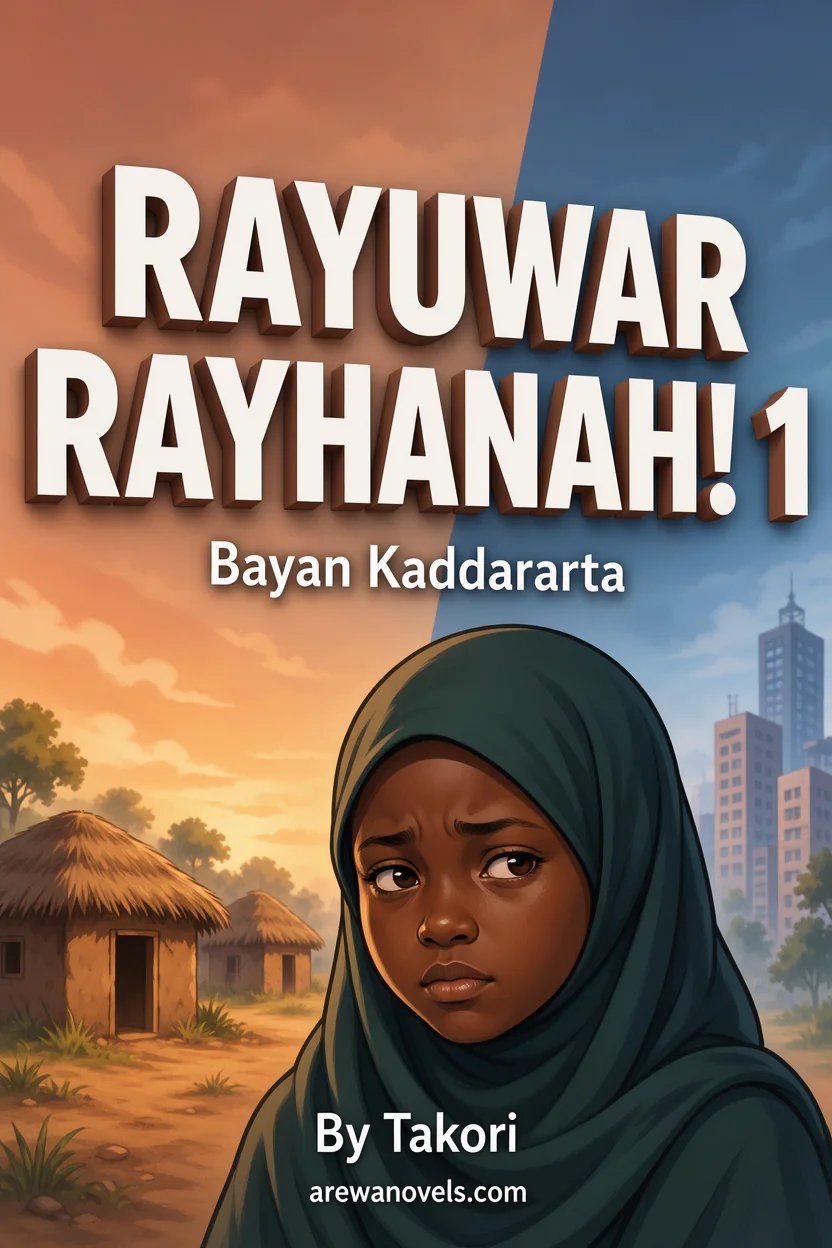
RAYUWAR RAYHANAH! 1 Bayan Kaddararta by Takori
Reading Time: 9 Hours
Added On: 25, Aug 2026
Author: Unknown
Ebook Compiler : Admin
Author Group : Unknown group
Author Phone : Not Inserted
Book License : Paid
Category: Urban/Real-life Drama
File Size: 299.59 kb
File Type: txt
Views: 6+
Download: 9+
Last download: 14 hours ago
Description / Story
RAYUWAR RAYHANAH! 1
Hook
What happens when a young girl’s dreams of education are placed against poverty, forced marriage, family pressure, loss, and a future she cannot control? RAYUWAR RAYHANAH! is a deeply emotional story about Rahane, a quiet and hardworking girl whose life begins in the modest community of Takai, where poverty is part of everyday existence but dignity, faith, family, and determination remain powerful sources of strength. Her greatest dream is simple: to continue her education and build a meaningful life. Yet the people around her begin making decisions that threaten to take that dream away.
Rahane's story becomes even more complicated when the man her father chooses for her is someone she fears and strongly rejects. Her grandmother, Iya Bilki, becomes the person willing to stand between Rahane and a marriage she believes is completely wrong for her. What follows is a chain of painful events involving escape, tragedy, survival, medical care, family conflict, and an unexpected change of environment that introduces Rahane to a completely different world.
At its heart, this is not simply a story about a girl growing up. It is a story about what happens when poverty, love, parental decisions, education, tradition, and human compassion collide.
Summary
Rahane grows up in Takai under difficult circumstances. Her father, Malam Rashidu, is a poor trader whose life revolves around finding enough money to feed his family and keep his daughter in school. Rahane's mother, Yalwati, dies shortly after giving birth to her, leaving Iya Bilki to become the central maternal figure in her upbringing. Although Rahane grows up without the comfort and opportunities available to many other children, she develops into a remarkably calm, respectful, hardworking, and thoughtful girl. She helps her father, cares for her grandmother, sells boiled eggs to contribute to the household, attends school, and quietly dreams of becoming educated.
The greatest conflict begins when Malam Rashidu, overwhelmed by poverty and indebtedness, agrees to give Rahane in marriage to Ado, a wealthy cattle owner and their landlord who has assisted the family financially for years. Rahane wants education, not marriage, and she is terrified of Ado. Iya Bilki strongly opposes the arrangement because she understands that Rahane is too young and that Ado is not the kind of man she considers suitable for her granddaughter. When the conflict becomes unbearable, Iya Bilki takes Rahane away from Takai. Their journey, however, ends in a terrible road accident that leaves Rahane seriously injured and takes Iya Bilki's life.
Rahane survives and is taken to a teaching hospital in Kano, where she receives treatment from Dr. Mansur and his medical team. The accident leaves her with a serious hearing problem requiring further investigation and the use of a hearing aid. Dr. Mansur becomes deeply concerned about her circumstances, particularly after discovering that she has lost her grandmother and has almost no one left to protect her. When they return to Takai, they discover that Ado has been abusing Malam Rashidu while demanding to know where Rahane has been taken. Ado's attempt to harm Rahane is stopped when Dr. Mansur and Ibraheem intervene, and the authorities take Ado into custody.
Dr. Mansur then makes a life-changing decision. Instead of allowing Rahane to return to the poverty and danger surrounding her former life, he asks her father for permission to take her to Kano and raise her alongside his own children. Malam Rashidu initially agrees to the arrangement, but his own understanding of Rahane's future remains complicated by the marriage promise he had already made to Ado. Eventually, Ado is financially compensated for what he claims to have spent on the family, leaves Takai, and Rahane begins a completely new chapter inside Dr. Mansur's household.
Life in Kano introduces Rahane to education, modern medicine, a structured family environment, and people whose social circumstances are completely different from her own. Dr. Mansur's wife, Dr. Asma'u, gradually begins to accept her, while Jawahir becomes kind and protective toward her. Abida, however, struggles deeply with Rahane's presence and repeatedly treats her with cruelty. As the years pass, Rahane grows into an intelligent and disciplined young woman. Her academic success begins to challenge the people who underestimate her, while her quiet nature and resilience gradually earn the respect of those around her. At the same time, the story begins developing a more complicated emotional dimension involving Khalipha and the increasingly powerful feelings surrounding Rahane's future.
Genre and Story Style
RAYUWAR RAYHANAH! 1 can be described primarily as a Hausa contemporary family drama with elements of romance, social commentary, coming-of-age fiction, tragedy, and inspirational storytelling.
The novel moves between intimate family experiences and wider social issues. It does not present poverty merely as a background detail. Poverty directly influences the decisions characters make, particularly Malam Rashidu's struggle to provide education for Rahane and the pressure that eventually pushes him toward an arrangement she does not want.
The story also contains elements of medical drama through Dr. Mansur's work and Rahane's treatment, while the educational journey gives the novel a strong coming-of-age dimension. Later developments introduce questions about affection, emotional attachment, marriage, class differences, disability, and whether genuine love can overcome social expectations.
Setting
The story begins primarily in Takai, a community where farming, livestock rearing, petty trading, and self-reliance dominate everyday life. The novel presents Takai as a place where people depend heavily on one another, yet where poverty remains a serious reality for families like Rahane's.
The story later expands into Kano, particularly through the hospital environment and Dr. Mansur's household. This creates a strong contrast between Rahane's original rural life and the more sophisticated urban environment she enters. Dr. Mansur's home represents education, financial stability, structured family life, modern healthcare, and opportunities that Rahane could never have imagined while living in Takai.
The contrast between Takai and Kano is important because Rahane is essentially forced to adapt to two very different worlds. Her physical environment changes, but her quiet personality, humility, faith, and memories of her father continue to shape her.
Core Themes
Education and the Fight for a Better Future
Education is one of the strongest ideas running through Rahane's story. Her grandmother believes she should continue studying and become a medical professional, while Rahane herself understands that education could provide an escape from the limitations surrounding her. Her later academic progress demonstrates how opportunity can transform a person's life when determination is supported by people who believe in them.
Poverty and Difficult Choices
Malam Rashidu's decisions cannot be separated from his poverty. He loves his daughter, but financial desperation repeatedly places him in situations where his choices become morally complicated. The novel asks readers to consider how poverty can pressure ordinary people into making decisions they would never make under better circumstances.
Forced Marriage and Female Agency
Rahane's resistance to Ado is one of the central conflicts of the story. She knows what she wants for her future and refuses to pretend that fear is love. Her struggle highlights the importance of allowing young women to have a voice in decisions concerning marriage, education, and their own futures.
Family and Responsibility
Family in this novel is not limited to biological relationships. Iya Bilki's devotion to Rahane, Dr. Mansur's decision to protect her, Jawahir's kindness, and even Khalipha's growing concern demonstrate different forms of responsibility and attachment. The novel repeatedly asks what it truly means to become responsible for another human being.
Compassion and Humanity
Dr. Mansur's relationship with Rahane begins through compassion. He sees a vulnerable child who has suffered circumstances far beyond her control and decides that her disability should not become a reason for her life to be limited. His determination to give her education and stability becomes one of the story's strongest examples of human kindness.
Disability and Acceptance
Rahane's hearing impairment becomes an important part of her identity and future. Rather than presenting her condition as the end of her possibilities, the story explores how support, education, technology, and understanding can help someone continue living a meaningful life.
Class and Social Differences
Rahane moves from a poor rural household into an affluent and educated family. The difference is enormous, and her adjustment to the new environment creates some of the novel's most memorable moments. Her unfamiliarity with modern facilities and urban customs shows how deeply environment shapes a person's understanding of the world.
Key Characters
Rahane / Rayhanah
Rahane is the emotional centre of the story. She is quiet, disciplined, respectful, hardworking, intelligent, and remarkably patient. Her greatest strength is not physical beauty or social status but her character. She experiences poverty, the loss of her mother, the loss of her grandmother, forced marriage pressure, physical trauma, disability, and social displacement, yet she continues moving forward. Her academic achievements later become evidence of the potential that existed within her all along.
Malam Rashidu
Rahane's father is a poor but hardworking man whose love for his daughter is complicated by his desperate circumstances. He wants Rahane to have a good future, but his dependence on Ado ultimately places her in danger. His character demonstrates how poverty can distort even a parent's best intentions.
Iya Bilki
Iya Bilki is one of the strongest protective figures in Rahane's early life. She raises Rahane after Yalwati's death and refuses to surrender her to relatives. She is outspoken, fearless, deeply attached to Rahane, and determined to protect her from men she believes have bad intentions. Her decision to leave Takai with Rahane becomes one of the most consequential decisions in the story.
Ado
Ado is a major source of conflict. He is financially powerful compared with Rahane's family and has helped Malam Rashidu in the past, but his sense of entitlement eventually becomes dangerous. He believes his financial assistance gives him a claim over Rahane, creating one of the novel's strongest conflicts between money, power, and consent.
Dr. Mansur Balarabe Takai
Dr. Mansur is a compassionate, educated, disciplined, and socially conscious doctor who becomes deeply invested in Rahane's future. His decision to take responsibility for her changes the direction of her life. He sees education and proper care as necessities rather than privileges and becomes one of the most important people in Rahane's journey.
Dr. Asma'u Takai
Known within the family as Mami, Dr. Asma'u is a successful paediatrician and the wife of Dr. Mansur. Initially, she struggles with the idea of bringing an unknown village girl into her closely protected family. However, Rahane's character gradually changes her attitude, particularly after she repeatedly observes Rahane's honesty, humility, discipline, and kindness.
Ibraheem Mansur Takai
Ibraheem, also called I.M or Himu, is Dr. Mansur's son. He is intelligent, disciplined, serious, highly observant, and emotionally reserved. At first he strongly dislikes Rahane's presence and distances himself from her. However, as he learns more about her history and circumstances, his attitude begins to change.
Jawahir
Jawahir is one of the first members of Dr. Mansur's family to show Rahane genuine kindness. She helps Rahane adjust to unfamiliar surroundings, teaches her how to use modern facilities, helps her with her clothes, and gradually treats her like a sister. Her compassion makes her one of Rahane's strongest sources of comfort in Kano.
Abida
Abida is one of the most difficult relationships Rahane faces after moving into Dr. Mansur's home. She resents the attention Rahane receives and repeatedly humiliates her. Her hostility becomes an important source of tension within the household and later becomes intertwined with jealousy over Rahane's academic progress and relationships with other family members.
Khalipha
Khalipha develops into an important figure in Rahane's life. He is kind toward her and pays attention to her emotional wellbeing. As Rahane grows older, their relationship becomes increasingly complicated, with moments that suggest feelings neither of them fully understands. His character introduces another emotional dimension to Rahane's future.
Analytics and Insight
One of the strongest features of RAYUWAR RAYHANAH! 1 is its use of contrast. Rahane begins life in a poor rural household where even school fees can become a major crisis, then enters a wealthy and educated family where books, medicine, technology, structured schooling, and modern facilities are normal. This contrast allows the reader to experience her transformation rather than simply being told that her life has changed.
The novel also builds its emotional impact through repeated tests of Rahane's character. She does not become strong because she suddenly becomes aggressive or outspoken. Her strength comes from patience, discipline, faith, humility, and her ability to continue functioning despite circumstances that would break many people.
Another significant strength is the way education functions as more than a background activity. It represents freedom. Rahane's desire to study is connected directly to her independence and her ability to determine what happens to her future. Her later academic achievements therefore carry emotional significance because the reader knows exactly what she had to overcome to reach them.
The novel's treatment of family is also layered. Some characters love Rahane but make harmful decisions on her behalf. Others initially reject her but gradually accept her. This prevents the story from presenting family relationships as completely simple. Love can coexist with fear, misunderstanding, jealousy, sacrifice, and regret.
Most importantly, Rahane's journey raises a central question: If someone is given another chance at life, can education, compassion, and genuine human support help them become the person they were always capable of becoming? The events surrounding Rahane suggest that the answer may be yes, but her future remains uncertain.
A Quote That Captures the Story
“Duniya ba matabbata ba ce, haka komai na cikinta yana da lokaci.”
The line captures one of the novel's deepest ideas: nothing in life remains exactly as it is forever. People are born, grow, lose loved ones, encounter unexpected opportunities, and are forced to adapt to circumstances they never planned for.
What Readers Can Expect
Readers should expect an emotional journey filled with family struggles, poverty, education, tragedy, medical challenges, social differences, personal growth, and complicated relationships. Rahane's story moves from the simplicity of village life into a world she never imagined entering, and every new stage brings another challenge.
The novel is particularly compelling because Rahane's greatest battle is not simply against one person. She is fighting against circumstances: poverty, lack of opportunity, social expectations, fear, disability, grief, and uncertainty about where she truly belongs.
By the later portion of the provided story, Rahane has grown considerably, achieved academic success, and begun thinking seriously about her future and the possibility of building a family of her own. Yet the question of who can truly understand, accept, and stand beside her remains unresolved.
RAYUWAR RAYHANAH! 1 is therefore a story about survival, transformation, education, family, and the search for a place where a person can finally feel that they belong.
Read / Download RAYUWAR RAYHANAH! 1 Bayan Kaddararta by Takori
You Cannot Download this book untill you login but you can read it .
OR
Login RegisterReleted Novels
- SARA SA SASSAƘA Ƙiyayyar Gado By Aisha Adam -
- Kida A Ruwa Book 2 Complete Hausa Novel by Billyn Abdul - Billyn Abdul
- DEEN MARSHALL Zabin Zuciya by Mamuhgee -
- RUBUTACCEN AL'AMARI by AYSHA ALI GARKUWA -
- ZAGON ƘASA Daga Cikin Ganuwa By KHADEEJA CANDY -
- Ƙanwar Maza Complete Hausa Novel by Aisha Adam - Aisha Adam Cool
- FAHIMAH Gaskiyar Da Aka Ɓoye book 1 By Takori Kabara -
- DR MUHSEEN Bayan Tsoro by RUKAYYA IDRIS BALAH -
- Kiɗa A Ruwa Complete Hausa Novel by Bilyn Abdull -
- FUTUHATUL KHAIR Ƙofar Sabuwar Rayuwa by Xainab Y Hussain -
- Diyam Complete Hausa Novel by Maman Maama -
- Deen Marshal Complete Hausa Novel by Mamuhgee - MaMuhgee