
SARA SA SASSAƘA Ƙiyayyar Gado By Aisha Adam Complete Hausa Novel Document by SARA SA SASSAƘA Ƙiyayyar Gado By Aisha Adam
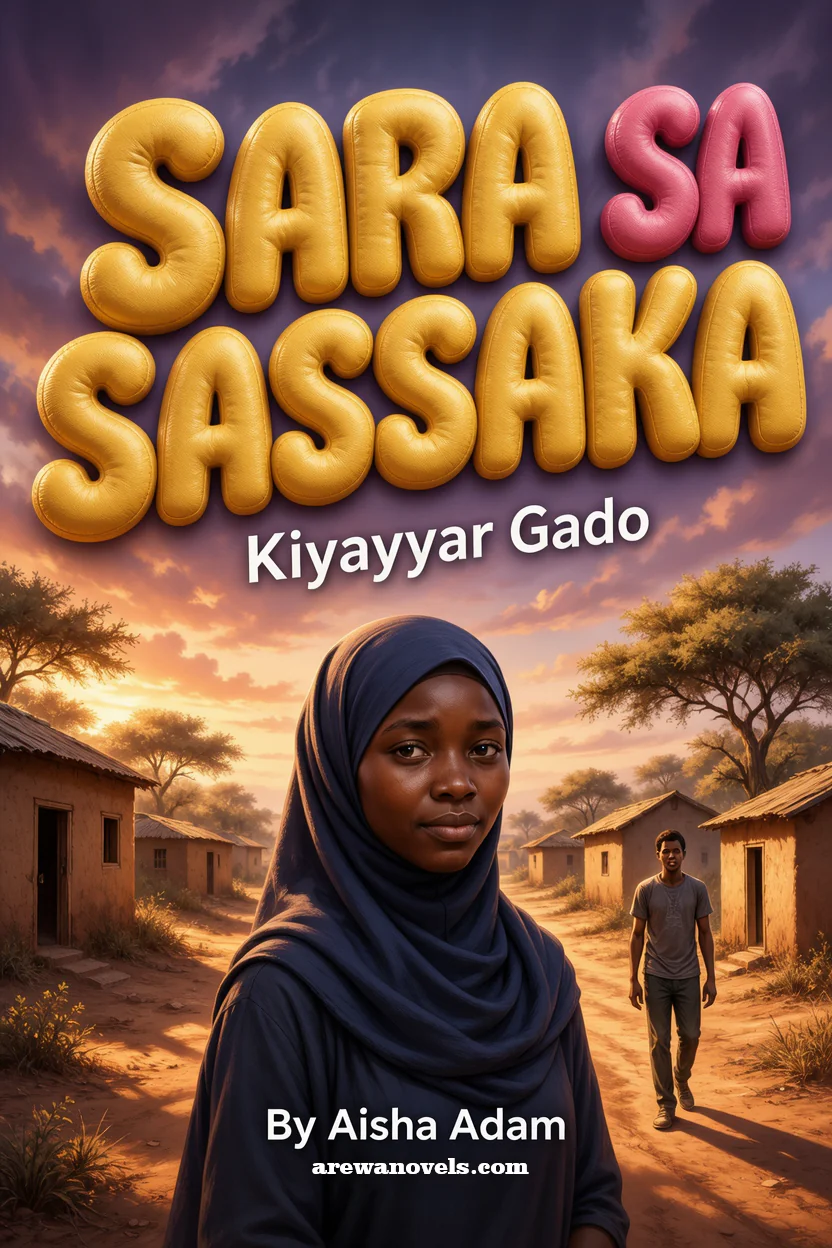
SARA SA SASSAƘA Ƙiyayyar Gado By Aisha Adam
Reading Time: 5 Hours
Added On: 25, Aug 2026
Author: Unknown
Ebook Compiler : Admin
Author Group : Unknown group
Author Phone : 08081012143
Book License : Paid
Category: Urban/Real-life Drama
File Size: 304.26 kb
File Type: txt
Views: 7+
Download: 3+
Last download: 14 hours ago
Description / Story
Absolutely. I have reviewed the supplied text for SARA SA SASSAƘA by Aisha Adam (Ayshercool) and will base the description on the actual material provided, especially the characters, conflict, setting, themes, and events established in the manuscript. The text identifies the book as SARA SA SASSAƘA and the author as Aisha Adam (Ayshercool).
SARA SA SASSAƘA
By Aisha Adam (Ayshercool)
Hook
What happens when a community inherits a hatred so old that nobody can remember exactly how it began, yet everyone is expected to continue carrying it?
In a place where an old ethnic conflict has become part of everyday life, education is treated with suspicion, political power is manipulated from behind closed doors, and innocent people can be punished simply because of the group they were born into, a new generation is forced to make a difficult choice. They can either inherit the bitterness of their ancestors or dare to imagine a different future.
SARA SA SASSAƘA opens with fear, violence and unanswered questions, then gradually draws the reader into the lives of people who are trying to survive inside a society where history has become a weapon. At the heart of the story is Ramata, a young Muslim woman whose intelligence, determination and education make her stand out in a community that is not always ready to accept what she represents.
But education is not the only thing separating Ramata from the expectations placed upon her. Love, family loyalty, ethnic divisions, political manipulation and the weight of inherited hatred all collide around her. As the story unfolds, the reader is left wondering whether personal courage can succeed where generations of people have failed.
Summary
The novel begins with an atmosphere of danger. On a stormy night, a man desperately leads a young boy away from a town, urging him to escape before daylight because those searching for him may find him. The emotional weight of the man's decision immediately establishes a world where survival sometimes requires separation, sacrifice and silence. His promise that he will return leaves behind one of the story's earliest questions: what happened in that place, and why was the boy forced to flee?
The story then moves into a wider picture of political tension. While citizens wait for the announcement of an election result under heavy security, powerful men are secretly discussing how to destabilize a leader who has stopped following their wishes. Their conversation reveals a disturbing reality in which political power is controlled behind the scenes and security can be manipulated to create fear. The idea is brutally simple: when people are afraid, they become easier to control.
From there, the novel takes the reader into Yelwa, a community where several ethnic groups once lived together but where one group eventually became dominant and subjected the others to oppression. The narrator explains that the hatred was inherited from previous generations, even though those living in the present did not personally witness its beginning. This inherited conflict becomes one of the central forces shaping the characters' lives. The arrival of the rainy season, normally associated with blessing, farming and prosperity, instead becomes a reminder of the old tension and the violence that may return with it.
One of the most painful episodes involves Iro, who returns to the village after spending months away. He is later found severely beaten and dying after being accused by Saleh and his followers of attempting to violate a young woman from their community. His family insists that the accusation is false, but the power structure of the village leaves them almost helpless. Iro is publicly humiliated, beaten, tied to a tree and eventually dies. Even after his death, Saleh refuses to allow him to receive the dignity of a proper burial. The incident becomes a devastating reminder of what happens when prejudice, power and mob justice replace truth.
The tragedy changes the narrator's understanding of the conflict. Instead of simply accepting the hatred that has been handed down through generations, she begins questioning it. She wants to know who the girl was and why Iro was accused. More importantly, she begins thinking about whether revenge will only create another generation of victims. Her determination to uncover the truth places her on a dangerous path because the community has already demonstrated that challenging the established order can have serious consequences.
Another major strand of the story revolves around Ramata, a bright young woman whose education makes her both a source of pride and a target of criticism. Her Baffa believes strongly in education and dreams of seeing her continue her studies. Ramata herself refuses to believe that education should separate her from her culture, family or responsibilities. She can study, care for animals and remain deeply connected to the values with which she was raised. Her relationship with Bukar further complicates matters because their families are connected to the old divisions within the community.
At the same time, Alina's storyline introduces another layer of mystery. She repeatedly encounters a strange young man who appears to be following her. His unusual appearance and intense eyes frighten her, but when her brother Ismail confronts him, the situation becomes more complicated. The young man claims that he is not following Alina and is simply passing through the area. He is described as an Almajiri and Qur'anic student who has been allowed to stay in a small building belonging to a local man. Yet Alina cannot easily dismiss the feeling that something about him is important.
The mystery surrounding the young man deepens as Alina begins to notice that his presence affects her in ways she cannot explain. After Ismail publicly confronts and humiliates him, Alina feels guilty because she realizes that the situation may have been misunderstood. Instead of feeling relieved, she becomes troubled by what happened to the young man. Their encounters therefore become another thread of suspense running alongside Ramata's struggle, the ethnic conflict and the wider political tensions surrounding the community.
Genre
SARA SA SASSAƘA is a social drama built around ethnic conflict, family relationships, political tension, education, mystery and human survival. It combines elements of suspense and emotional drama with romance and community-based storytelling.
Rather than focusing on only one type of conflict, the novel connects personal struggles with larger social problems. The characters are not living in isolation. Their decisions are affected by family expectations, inherited grudges, political power, education, religion, poverty and the traditions of their community.
The novel therefore belongs to the kind of Hausa fiction that uses individual characters to explore problems affecting an entire society.
Setting
A significant part of the story takes place in a rural community in northern Nigeria, particularly around the fictionalised environment of Yelwa. The community is surrounded by farms, grazing areas, traditional homes and the everyday realities of rural life.
The rainy season is particularly important to the atmosphere of the novel. Normally, the rain represents blessing, farming, growth and abundance. In this story, however, the same season also awakens memories of old hostility and creates an atmosphere of uneasiness. The contrast gives the setting a symbolic importance. Nature may be peaceful, but the people living within it are carrying unresolved wounds.
The story also moves beyond the village into schools, Islamic learning environments, roads, family compounds and other spaces where the characters interact. These locations allow the novel to contrast traditional community life with education and modern influences.
Core Themes
The Burden of Inherited Hatred
One of the strongest themes in the novel is the danger of inheriting hatred without questioning its origin. The narrator openly reflects on how the people of the community inherited an ideology from parents and grandparents without knowing exactly how it began.
This makes the conflict more than a disagreement between individuals. It becomes a cycle passed from one generation to another.
Ethnic Division and Injustice
The novel examines what happens when one community becomes powerful enough to dominate another. The people of Yelwa have learned to live with oppression, fear and discrimination, while those holding power use their position to enforce their version of justice.
Iro's death becomes one of the clearest examples of how dangerous this system can become when accusation is accepted as truth and ordinary people are too frightened to challenge those in authority.
Education as a Path to Change
Ramata represents one of the clearest arguments for education in the novel. Her Baffa sees learning as a possible way out of the conditions that have trapped their community for generations. He believes education could give the younger generation the ability to understand their situation and search for solutions.
Ramata's education also challenges the belief that an educated woman must abandon her culture or responsibilities. She remains connected to her family and community while pursuing academic success.
Love Against Historical Division
Ramata and Bukar's relationship introduces the possibility of two people attempting to cross a boundary that their families and communities have maintained for generations.
Their situation is complicated because their relationship is not taking place in an ordinary environment. The hostility between their communities creates doubts about whether love alone can overcome a conflict that existed before either of them was born. Ramata nevertheless refuses to accept that education or social background should automatically determine who she can marry.
Family and Sacrifice
Family is another powerful element throughout the story. Baffa's relationship with Ramata is particularly important because he does not simply see her as a young woman who needs to be married off. He sees her potential and wants her education to continue, even discussing plans to ensure she can study beyond his lifetime.
The novel also shows the sacrifices made by older siblings, particularly through Harisu, who carries responsibility for his mother and younger siblings after their father's death.
Fear, Power and Silence
The novel repeatedly asks what ordinary people can do when those with authority are willing to use fear against them.
Saleh's treatment of Iro demonstrates how intimidation can silence an entire community. Even people who disagree with what is happening struggle to speak because they fear becoming the next victims.
The political scenes expand this idea beyond the village. There, powerful individuals openly discuss using insecurity as a tool for political control.
Key Characters
Ramata
Ramata is one of the novel's most important young characters. She is intelligent, educated, ambitious and deeply attached to her family. Her character challenges the idea that education must make a person reject their traditional environment.
She is also courageous enough to question the divisions around her. Her relationship with Bukar forces her to confront the possibility that the hatred between their communities could stand between two people who genuinely understand one another.
Baffa
Baffa is Ramata's strongest supporter and one of the novel's clearest representatives of wisdom, education and progressive thinking. He wants Ramata to continue her studies and believes education could eventually help solve some of the problems affecting their community.
His character represents the older generation at its best: someone who understands tradition but is also willing to recognize the need for change.
Bukar
Bukar is closely connected to Ramata and shares her hope that the old hostility should not determine their future. Although he worries about the difference between their educational backgrounds and the opposition from their families, he encourages Ramata to remain strong.
His relationship with Ramata adds an emotional dimension to the novel while also exposing how deeply social conflict can interfere with personal choices.
Iro
Iro's story becomes one of the most painful turning points in the narrative. He returns to the village after being away for months, only to become the victim of a brutal accusation and punishment.
His fate represents the devastating consequences of prejudice, mob justice and unchecked authority. His death also becomes a catalyst for questions about truth, revenge and justice.
Saleh
Saleh represents the dangerous side of inherited power. He is willing to use intimidation and violence to enforce his authority and to punish anyone he believes has crossed a boundary.
His actions demonstrate how quickly accusations can become weapons when people are afraid to challenge those who hold influence.
Alina
Alina is a younger character whose storyline brings mystery and emotional suspense into the novel. She is initially frightened by a strange young man who repeatedly appears along her route.
Her fear is understandable from her perspective, but her experiences also reveal how easily appearances can create assumptions. As the story develops, her feelings toward the young man become more complicated.
Ismail
Ismail is protective of Alina and reacts strongly when he believes someone may be threatening her. His confrontation with the young man shows both his protective nature and the danger of acting before fully understanding a situation.
The Mysterious Young Man
The young man who repeatedly appears around Alina is one of the story's intriguing mysteries. His unusual appearance initially makes Alina suspicious and afraid, yet his calm response when confronted suggests that there may be more to him than appearances reveal.
His identity, intentions and connection to the surrounding events create an important suspense thread.
The Role of History
History is not merely background information in SARA SA SASSAƘA. It actively shapes the decisions of the characters.
The novel explores how historical events, colonial interference, political decisions and the actions of previous generations can continue influencing people who were not alive when those events happened. Ramata's conversations about African history demonstrate her awareness that present problems cannot always be understood without examining the past.
This gives the novel a broader social dimension. The story is not simply asking who is right or wrong in one village dispute. It is asking how societies reach a point where people begin treating inherited conflict as an unquestionable truth.
Analytics and Insight
From a storytelling perspective, SARA SA SASSAƘA is driven by multiple interconnected conflicts rather than a single storyline. The major conflict between communities provides the foundation, while individual stories involving Ramata, Bukar, Alina, Iro and their families create smaller emotional conflicts within the larger one.
The strongest narrative technique is the contrast between ordinary life and underlying danger. Characters can be discussing school, farming, family responsibilities or everyday matters one moment, and then find themselves confronted by fear, discrimination or violence.
Ramata's storyline is particularly significant because she represents possibility. She is young enough to belong to a new generation but connected enough to the older generation to understand what her community has suffered. Her education gives her a different perspective, but she does not see education as an excuse to abandon her roots.
The novel also uses mystery effectively. The strange young man around Alina creates questions that encourage the reader to continue. Why is he always appearing around her? Is he truly following her, or is there another explanation? Why does his presence seem to affect her so strongly?
Another important strength is the use of parallel stories. While Ramata's world focuses heavily on education, ethnic division and the possibility of love across a historical boundary, Alina's story introduces uncertainty and mystery. These separate threads create the expectation that the different pieces may eventually connect.
What Makes the Novel Worth Reading?
Readers who enjoy Hausa novels with social issues, emotional family relationships, suspense and complicated community conflicts will find several reasons to continue reading SARA SA SASSAƘA.
The story does not present conflict as something simple. It shows how ordinary people can become trapped inside problems they did not create. It also explores the courage required to question beliefs that everyone around you considers normal.
Most importantly, the novel gives the reader something to think about beyond the individual characters. It asks whether hatred can truly survive when the next generation chooses education, understanding and personal relationships over inherited division.
A Thought-Provoking Quote
“Kar mu bar wata gaba da rashin jituwar da ba mu san lokacin da aka fara ba, su hana mana cikar burinmu.”
The line captures one of the central ideas of the novel: a person should not automatically sacrifice their future because of a hatred whose original cause may no longer even be known. The sentiment comes directly from the conversation between Ramata and Bukar in the supplied text.
Final Impression
SARA SA SASSAƘA is a story about people trying to find a way forward while carrying the wounds of the past.
It brings together ethnic conflict, political manipulation, education, family loyalty, love, fear, mystery and the struggle for dignity. Behind the suspense is a deeper question about humanity: how long should people continue fighting over an inherited hatred before someone becomes brave enough to ask whether the hatred should have survived at all?
Ramata's determination, Baffa's belief in education, Bukar's willingness to challenge inherited divisions, Iro's tragic fate and Alina's mysterious encounters all contribute different pieces to a larger narrative.
For readers, the real attraction is not simply discovering what happens next. It is discovering how these separate lives are connected, what secrets remain hidden beneath the surface, and whether the younger generation can escape the cycle that trapped those who came before them.
SARA SA SASSAƘA therefore promises more than a conventional romance or village drama. It is a story of inherited conflict, personal courage, social injustice and the difficult search for a better future.
Read / Download SARA SA SASSAƘA Ƙiyayyar Gado By Aisha Adam
You Cannot Download this book untill you login but you can read it .
OR
Login RegisterReleted Novels
- Kida A Ruwa 3 Complete Hausa Novel by Billyn Abdul - Billyn Abdul
- Harijin Tsoho Complete Hausa Novel by Zahra M Surbajo -
- ZAGON ƘASA Daga Cikin Ganuwa By KHADEEJA CANDY -
- Kida A Ruwa Book 2 Complete Hausa Novel by Billyn Abdul - Billyn Abdul
- Kalbim Book 1 Complete Hausa Novel by Mamuhgee - MaMuhgee
- Ƙanwar Maza Book 3 & 4 Complete Hausa Novel by Aisha Adam - Aisha Adam Cool
- FAHIMAH Gaskiyar Da Aka Ɓoye book 1 By Takori Kabara -
- Diyam Complete Hausa Novel by Maman Maama -
- FUTUHATUL KHAIR Ƙofar Sabuwar Rayuwa by Xainab Y Hussain -
- Rayuwa Da Giɓi Complete Hausa Novel by Batul Mamman - Batul Mamman
- RAYUWAR RAYHANAH! 1 Bayan Kaddararta by Takori -
- Abu-Turaab Fadan Zuciya da Karfi by Asmy B -