Mudi Sipikin Biography: Life, Poetry and Political Legacy
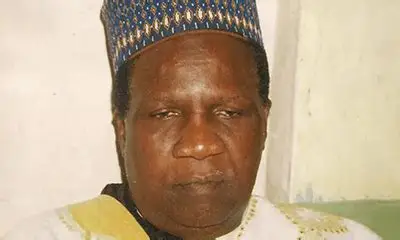
Mudi Sipikin was a Nigerian Hausa poet, political activist and businessman whose writing addressed inequality, governance, religion and the everyday struggles of ordinary people. Born Mahmud Muhammad in Kano in 1930, he became one of the important voices in modern Hausa poetry, using verse to question established political authority and advocate social change.
His literary career developed alongside Nigeria's struggle for independence and the political debates that shaped Northern Nigeria. Through poems published in Hausa newspapers and performed before public audiences, Sipikin made poetry a platform for political discussion. His contribution extended beyond literature through his involvement in the Northern Elements Progressive Union (NEPU) and his efforts to promote education and public awareness.
Early Life and Education
Mudi Sipikin was born Mahmud Muhammad in the Darma quarters of Kano in 1930. He grew up in a society where Islamic scholarship, oral storytelling and Hausa poetry formed important parts of cultural life. His father, Muhammadu Buwa, introduced him to Arabic and Islamic literature, helping establish the intellectual foundation for his later writing.
Sipikin did not follow the conventional path of formal Western education during his early years. He studied the Qur'an and Islamic subjects under local teachers, including Mallam Umaru Badamagare. He later expanded his knowledge through independent study, adult education and correspondence courses with a British institution.
His intellectual development also benefited from contact with educated contemporaries and political thinkers, including Sa'adu Zungur, Maitama Sule and Aminu Kano. These relationships exposed him to debates about colonial rule, traditional authority, political representation and the future of Northern Nigeria.
Although he lacked the formal educational background common among many professional writers, Sipikin developed a distinctive voice through reading, observation, public debate and sustained poetic practice.
How Mudi Sipikin Became a Poet
Sipikin began writing poetry as a young man. His first known poem appeared in 1946, when he was about 18 years old. The work addressed the welfare of poor people, establishing a concern with social conditions that remained central to his writing.
During the 1950s, his poems gained wider attention through publication in Gaskiya Ta Fi Kwabo, a Hausa-language newspaper that helped connect writers with a growing readership. Newspaper publication gave his poetry a public audience and allowed his ideas to enter discussions about political and social change.
His writing covered a wide range of subjects, including religion, education, economic life, morality, politics and the experiences of ordinary Nigerians. He produced hundreds of poems during his lifetime, demonstrating both the range of his interests and his commitment to Hausa as a language of serious literary expression.
Sipikin's poems were not confined to private reading. He also performed them at public events, where rhythm, language and delivery helped make complex ideas accessible to listeners. This connection between poetry and public debate became a defining feature of his career.
Political Activism and NEPU
Sipikin's literary work developed alongside his political activism. He became a founding member of the Northern Elements Progressive Union, established in 1950. NEPU emerged as an opposition movement in Northern Nigeria and challenged the political dominance of established authorities during the late colonial period.
The party advocated political reform and greater attention to the interests of ordinary people. Sipikin supported these ideas through both political organising and poetry. His writing questioned the concentration of power and encouraged readers to consider alternative forms of governance.
In 1951, he established the Askianist Movement, which operated as an offshoot of NEPU. The movement sought political transformation and drew its name from Muhammad Askia, the ruler associated with the historic Songhai Empire. It later collapsed following internal financial irregularities and organisational difficulties.
Sipikin also participated in wider constitutional discussions. In 1953, he attended the London Constitutional Conference as a delegate associated with the Action Group. His political involvement reflected an interest in Nigeria's constitutional future and the place of Northern Nigeria within the emerging nation.
His activism brought risks. He experienced imprisonment and persecution connected to his political activities during the colonial era. These experiences formed part of the political environment that shaped his writing and strengthened the relationship between his poetry and his public convictions.
Famous Poems and Literary Legacy
One of Sipikin's best-known works is Arewa Jamhuriya Kawai, often translated as The North, a Republic Pure and Simple. The poem responded to Sa'adu Zungur's Arewa Jumhuriya ko Mulkiya, which examined whether Northern Nigeria should embrace republican government or retain monarchical structures.
Sipikin argued for a republican direction and challenged the traditional emirate system. His position reflected the political reform ideas associated with NEPU and its opposition to established authority. The exchange between the two poets demonstrates how Hausa poetry became a medium for debating the region's political future.
Another important work is Wasiyya Sipikiyya, a poem presented in the form of a personal will. Written during his period of political involvement, it reflects on death, family, burial and the relationship between an individual and the community. Its unusual subject and emotional force have made it an important work in discussions of modern Hausa poetry.
Sipikin also published collections such as Tsofaffin Waƙoƙi da Sababbin Waƙoƙi, meaning Old and New Poems. His work Waƙoƙin Ilimi da Tarbiyya Don Yara focused on education and moral instruction for children.
These works illustrate the breadth of his poetry. He could address political ideology, religious reflection, social welfare and personal mortality while drawing on the language and conventions familiar to Hausa audiences.
The Hikima Club and Public Education
In 1964, Sipikin founded the Hikima Club, a literary association that brought Hausa poets together to compose, discuss and perform poetry. The club operated in Kano and Kaduna and encouraged writers to address current events and social questions through verse.
The organisation helped create a community for poets and provided a platform for sharing ideas. Its activities also included radio broadcasts, which allowed poems to reach listeners beyond literary gatherings and newspaper readers.
The club's emphasis on public performance reinforced Sipikin's view that poetry could serve an educational purpose. A poem could inform audiences about political developments, encourage moral reflection or introduce difficult social questions in a memorable form.
Hikima Club also contributed to the development of Hausa literary culture by bringing writers into sustained discussion about their work. Its activities helped preserve poetry as a living form of public communication rather than merely a written tradition.
Later Life and Contributions to Education
After Nigeria's independence, Sipikin remained involved in public life and literary activities. His interests extended beyond political poetry to education and literacy, areas he regarded as essential to social progress.
Between 1980 and 1983, he served as chairman of the Kano State Agency for Mass Education. The agency worked to improve access to learning and reduce illiteracy among adults and other underserved groups. During his tenure, it received a UNESCO award recognising its achievements.
His work in mass education complemented the concerns visible throughout his poetry. He had long written about the welfare of ordinary people, and literacy programmes offered a practical way to support broader participation in society.
Mudi Sipikin died on February 19, 2013, in Kano State. His death marked the end of a life that connected literary creativity with political activism, public education and cultural development.
Frequently Asked Questions
Who was Mudi Sipikin?
Mudi Sipikin was a Nigerian Hausa poet, political activist and businessman born in Kano in 1930. He became known for poetry addressing political reform, social inequality, religion and public life.
What was Mudi Sipikin's real name?
His birth name was Mahmud Muhammad. He became widely known as Mudi Sipikin through his political and literary activities.
What is Mudi Sipikin's most famous poem?
One of his best-known poems is Arewa Jamhuriya Kawai, which argued for a republican political system in Northern Nigeria. Another significant work is Wasiyya Sipikiyya.
What was Mudi Sipikin's role in NEPU?
He was a founding member of the Northern Elements Progressive Union, established in 1950. He supported the party's reformist aims through political activism and poetry.
What was the Hikima Club?
The Hikima Club was a literary association Sipikin founded in 1964. It brought Hausa poets together to create and perform poems about current affairs, culture and social issues.
Conclusion
Mudi Sipikin helped establish Hausa poetry as an important medium for political debate and social commentary in Northern Nigeria. His poems questioned established authority, explored the conditions of ordinary people and contributed to discussions about the region's political future.
His involvement in NEPU and the Hikima Club connected literary expression with public participation, while his later work in mass education extended his commitment to social development. Sipikin's legacy endures through his poetry and the role he played in shaping modern Hausa literary and political culture.