
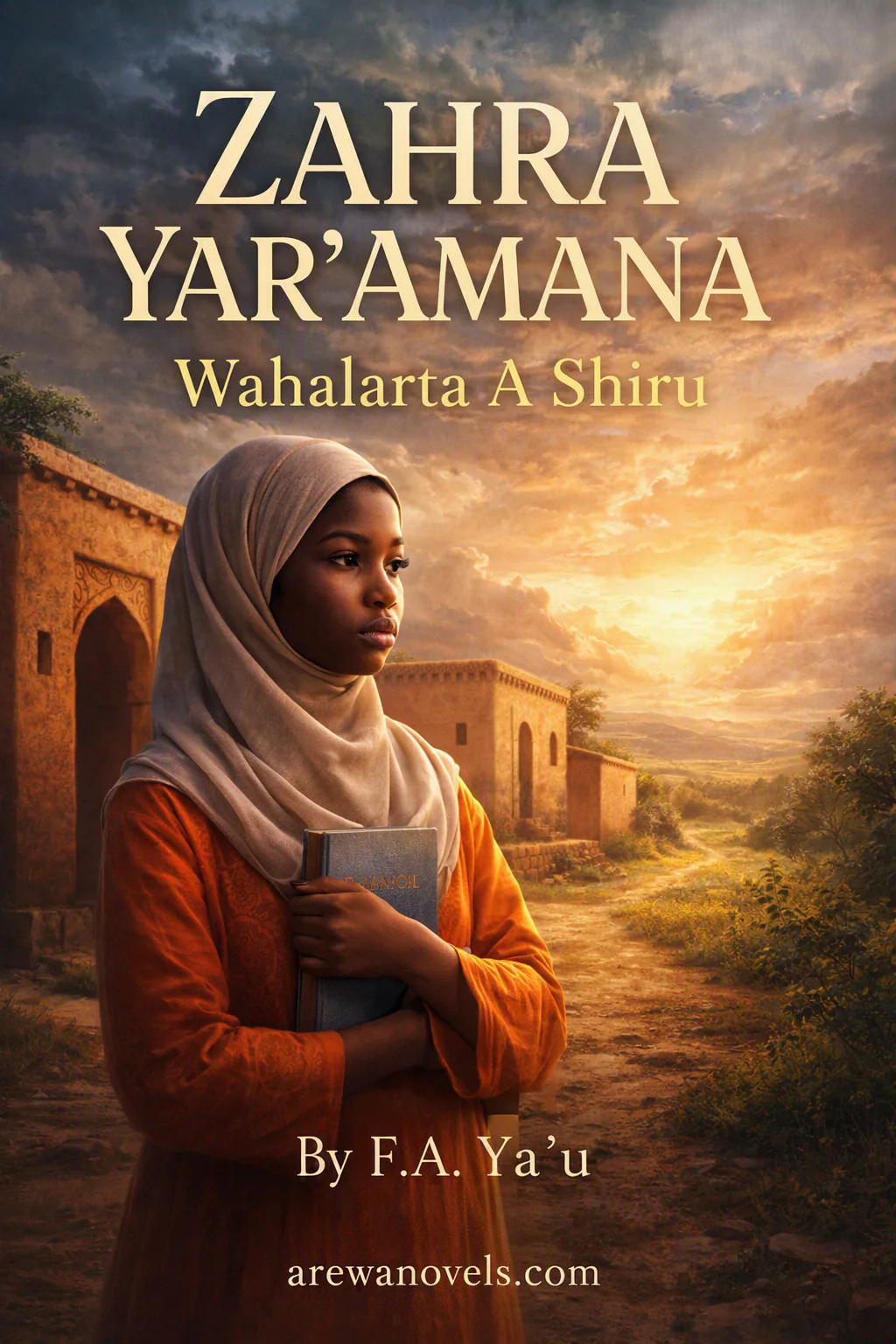
ZAHRA YAR`AMANA Wahalarta A Shiru By F.A
More book details
Description & Story Guide
ZAHRA YAR'AMANA
The Hook
Some children grow up surrounded by affection, protection, and the certainty that home is a place of safety. Zahra grows up knowing something very different. For her, home is where she is ordered around, denied food, beaten, humiliated, and made to feel as though her very existence is a burden. Yet beneath her silence is a young girl whose story carries secrets, loss, and a past far more complicated than the people around her realize.
When a violent storm tears apart the fragile shelter where she has been sleeping, Zahra is left seriously injured and fighting for her life. Her rescue opens the door to questions about who she really is, where she came from, and why so many people seem determined to keep her away from the life she deserves. But the truth about Zahra is not revealed all at once. It unfolds through pain, memory, family conflict, and unexpected people who begin to care about her.
Zahra Yar'amana is a story of suffering, survival, family secrets, abandonment, compassion, and the unexpected bonds that can emerge when one person's life seems forgotten by everyone else.
Summary
Zahra's childhood is marked by hardship from the very beginning. Living in a household where her stepmother treats her with cruelty, she is forced to perform exhausting household chores and is frequently punished for even the smallest things. School, which should have been her opportunity to escape into a different world, becomes another struggle because her responsibilities at home often prevent her from attending on time. Despite everything, she continues trying to hold on to her education and the little moments of happiness she can find outside the house.
Her father, Malan Musa, is aware of much of the tension surrounding Zahra, although he does not always understand the full extent of what she endures. Unlike the woman who mistreats her, he shows moments of tenderness toward the girl, buying her clothes, checking on her when she is sick, and defending her when necessary. Muhammad, Zahra's older brother, also becomes one of the people who cares about her. Yet the household remains deeply divided, and Zahra continues to suffer under the hostility of the woman who sees her as a problem rather than as a child who needs protection.
The situation becomes even more dangerous when severe weather strikes. Zahra retreats to the small room where she has been sleeping, unaware that the storm is about to transform her already difficult life into a fight for survival. The roof collapses, leaving her badly injured. When Malan Musa discovers her lying among the wreckage, bloodied and barely responsive, panic replaces the ordinary tensions of the household. He rushes her toward medical care, but another problem immediately emerges. The treatment she needs costs more money than he has.
Desperate to save her, Malan seeks help and considers selling his motorcycle to raise the necessary funds. Along the way, strangers become involved in Zahra's fate. Muktar refuses to abandon the injured girl, while a young man named Zaem offers unexpected assistance and remains concerned about her condition. Eventually, Zahra receives the emergency treatment she desperately needs. Her recovery is slow, but during the weeks she spends in the hospital, something changes. People who had previously known little about her suffering begin to see just how much she has endured.
The story then opens into Zahra's hidden past. She is revealed to be Dina's daughter, a child born from a troubled marriage that eventually breaks apart under poverty, family opposition, abandonment, and illness. After Dina's death, Zahra's life becomes even more vulnerable. She is taken into the household of Malan Musa, where her presence creates resentment and suspicion. Yet while some members of the family treat her with hostility, others show her kindness. As Zahra slowly recovers and more people begin to gather around her, the novel raises a powerful question: what happens when a child who has spent her entire life being unwanted finally begins to discover that she is worth protecting?
Genre and Setting
Zahra Yar'amana is primarily a Hausa family drama with strong elements of emotional fiction, domestic conflict, tragedy, mystery, and survival. The story explores both the intimate struggles of a troubled household and the wider relationships that surround Zahra as she moves through different stages of her life.
The story moves through several locations and circumstances, including Kano, Kaduna, Bauchi, schools, family homes, neighborhood settings, and hospital environments. These settings are important because Zahra's experiences change depending on where she is. School represents a chance for normal childhood, while home often becomes a place of fear and labor. The hospital, meanwhile, becomes a turning point where people from outside her immediate household begin to recognize the seriousness of her situation.
Core Themes
Childhood Suffering and Survival
At the heart of the novel is Zahra's struggle to survive an environment that repeatedly denies her comfort and security. She experiences hunger, physical punishment, exhausting work, rejection, and emotional isolation, yet she continues moving forward. Her endurance becomes one of the defining elements of her character.
Family Conflict
The novel presents a complicated picture of family. Blood relationships do not always guarantee kindness, while people who are not closely related can sometimes offer genuine compassion. The conflict surrounding Zahra reveals how jealousy, resentment, marriage problems, poverty, and old grievances can affect the most vulnerable person in a household.
Abandonment and Belonging
Zahra's story is deeply connected to the question of belonging. Her mother's struggles, her father's complicated circumstances, and the hostility she encounters after being taken into another household leave her uncertain about where she truly belongs. Her journey becomes partly a search for security and acceptance.
Compassion in Unexpected Places
Although Zahra encounters cruelty, the novel also shows that kindness can appear in unexpected forms. Her father attempts to protect her in his own way. Muhammad cares for her. Muktar refuses to leave her helpless at the hospital. Zaem becomes concerned about her condition despite barely knowing her. Neighbors also begin visiting and bringing things for her after her hospitalization. These moments provide a contrast to the cruelty she has endured.
Poverty and Desperation
Financial hardship repeatedly influences the decisions made by the characters. Medical treatment becomes a crisis because of its cost, while earlier parts of the story show how poverty affects Dina and Islam's marriage and their ability to provide for themselves and their child. The novel demonstrates how financial pressure can deepen existing family problems.
Hidden Identity and the Past
The story does not reveal everything about Zahra immediately. Her history is gradually uncovered through memories of Dina, Islam, the circumstances surrounding her birth, and what happened after her mother's death. This structure gives the novel an element of mystery because the reader is encouraged to understand Zahra's present by discovering the events that shaped her past.
Key Characters
Zahra
Zahra is the emotional center of the novel. She is a young girl whose childhood is dominated by hardship, but she is not presented as someone without strength. Despite being repeatedly mistreated, she continues going to school, completing household responsibilities, and enduring circumstances far beyond what a child should have to face. Her suffering makes her vulnerable, but it also becomes the foundation of a story about endurance and survival.
Malan Musa
Malan Musa is Zahra's father and one of the most complicated figures in her life. He is caught between his household responsibilities and his concern for his daughter. His actions show that he cares deeply about Zahra, particularly when she becomes seriously injured. His determination to find money for her treatment becomes one of the major moments that demonstrates the importance of his relationship with her.
Furai
Furai, Zahra's stepmother, is one of the main sources of conflict in the story. She treats Zahra harshly and repeatedly subjects her to punishment and deprivation. Her hostility toward the girl becomes one of the major forces shaping Zahra's childhood and creates serious tension within the family.
Muhammad
Muhammad is Zahra's older brother. He attends Rumfa College and is shown as someone who cares about Zahra despite the difficult circumstances around them. He attempts to protect her from mistreatment and later becomes closely involved in her care.
Dina
Dina is Zahra's mother, and her history explains much of the tragedy surrounding Zahra's early life. Her marriage to Islam begins with love but eventually becomes overshadowed by poverty, family rejection, separation, illness, and abandonment. Her death leaves Zahra without the mother who had cared for her.
Islam
Islam is Dina's husband and Zahra's father. His relationship with Dina begins with affection, but their marriage deteriorates as circumstances become increasingly difficult. His disappearance becomes one of the painful events that shapes Dina's life and ultimately affects Zahra's childhood.
Zaem
Zaem enters the story during Zahra's medical crisis. Despite being young, he shows concern for the injured girl and contributes to the effort to ensure that she receives care. His meeting with Malan Musa at the hospital becomes an important moment because it introduces another person who sees Zahra's suffering with sympathy rather than hostility.
Muktar
Muktar becomes involved when Zahra is discovered badly injured. He helps Malan Musa transport her and remains supportive during the desperate search for medical treatment. His willingness to help demonstrates one of the novel's recurring ideas that compassion can come from unexpected people.
Analytics and Insight
Zahra Yar'amana is structured around gradual revelation. Rather than presenting Zahra's entire history at once, the story first places the reader inside her difficult present before later opening the door to the events that shaped her life. This creates emotional suspense because the reader is initially left to wonder why this young girl is treated with such hostility and what happened to the family that originally cared for her.
The strongest emotional contrast in the novel comes from the difference between cruelty and compassion. Zahra can be denied food in one moment and cared for by someone else in another. She can be treated as though her life has little value, only for strangers to risk their own resources trying to save her. This contrast gives the story much of its emotional force.
The hospital sequence also functions as a major turning point. Zahra's injuries force several characters to confront the seriousness of her circumstances. What might previously have been dismissed as ordinary family conflict suddenly becomes a matter of life and death. Her condition brings people together and begins changing how others see her.
Another important element is the connection between Zahra's present and her mother's past. Dina's experiences with Islam, her pregnancy, her attempts to return to her family, and her eventual death provide the background necessary to understand how Zahra ended up living such a painful childhood. The story therefore operates on two emotional levels: the immediate struggle of Zahra and the older tragedy that created the circumstances surrounding her.
Most importantly, the novel leaves room for hope. By the end of the supplied material, Zahra has survived the accident, recovered significantly, and begun receiving attention from people who genuinely care about her. Her recovery does not erase the suffering she has experienced, but it suggests that her story may be entering a different chapter.
A Quote to Capture the Story
"A child can survive hunger, pain, and rejection, but what happens when she finally discovers that someone is willing to fight for her life?"
This line captures the central emotional tension of Zahra's journey: she has spent much of her childhood fighting simply to endure, while the people around her must eventually decide whether they will continue watching her suffer or stand up for her.
Why Readers Will Want to Read It
Zahra Yar'amana is not simply a story about a mistreated child. It is a layered family drama about how one person's suffering can be connected to years of hidden decisions, broken relationships, poverty, resentment, and loss. Zahra's journey gives the reader reasons to question every character's actions and to look beyond what is visible on the surface.
Her story moves from domestic suffering to a life-threatening accident, from a desperate search for medical treatment to the discovery of a painful family history. Just when the reader begins to understand Zahra's circumstances, another part of her past emerges and changes the way her present is understood.
For readers who enjoy emotional Hausa family stories filled with hardship, secrets, complicated relationships, suspense, and moments of unexpected kindness, Zahra Yar'amana offers a deeply emotional journey. It is a story about a girl who has been treated as though she does not matter, yet whose life gradually proves that she matters far more than the people around her ever realized.
The question is no longer simply whether Zahra will survive her suffering. The greater question is whether, after everything she has endured, she will finally find the family, protection, and belonging she has been denied for so long.
Read or download this novel
Choose the option available for your account and this book.
Related Novels
- AISHA-SIDDIQAH Amarya Mara Zato Book 2 By Sumayya Abdulkadir Takori -
- JIKAR IYA DELU Yarinyar Mamaki By Oum Yasmeen -
- ASHAWO (KARUWAR GIDA) 'Yancin Uwa 1 by Zahra Surbajo -
- ZAMAN TASHA Zuciyar Taurin Kai by YMMY AYSHA -
- IDAN KAYA YA GAJI Nauyin Aure by Badiat Ibrahim -
- ZINARIYA Satar Innocent By Aysha JB -
- ZATO NE Gaskiyar Boye NA By MAMAN ISLAM -
- AMRAH NAKE SO Sirrin Ciwo By Princess Amrah -
- YAN MATA `Yan Mata, Zukata Uku By SL Rimiv -
- KUNDIN AL`AJABI Neman Ƙarfi By Mansur Usman Sufi -
- KAWAR ZUCIYA Kafin Ta Karye By sumayya Abdulkadir Takori -
- ZZEE BABYZ Dawowar ’Yar Tawaye By Real Ladingo -