
A Word from the Lectern
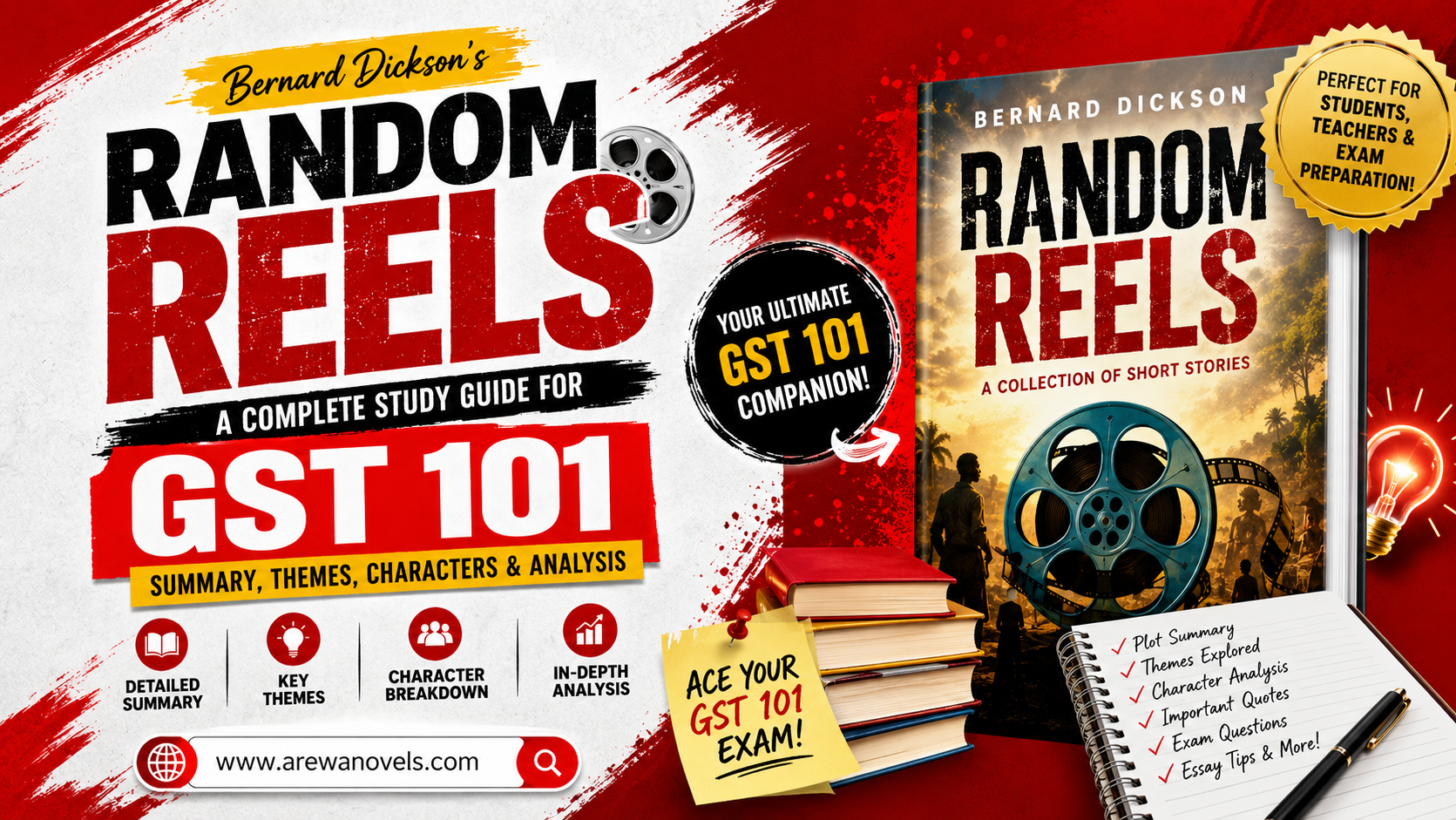
Sit with this text the way you would sit through a series of short films at a festival. That is the honest way to approach Random Reels. Many of you will come to this novel expecting one hero, one problem, one resolution, because that is the shape most stories have trained you to expect. Bernard Dickson refuses to give you that shape, and once you accept the refusal, the book opens up. What follows is a full walkthrough of the text: what it is about, how it moves, who populates it, why they act as they do, and what you are meant to carry away from it. Read it as preparation, not as a substitute for reading the novel itself. A guide can point you toward meaning; it cannot feel the book for you.
What the Book Is About
At its core, Random Reels is an argument, made through fiction, that a human life cannot be honestly told as a single straight line. Dickson builds his novel out of separate scenes, or "reels," each one a self-contained slice of somebody's experience. There is no single protagonist carrying the weight of the narrative from cover to cover. Instead, the book is about life itself treated as its true subject: fragmented, unpredictable, made of many small moments rather than one grand plot. If you are looking for the one sentence that captures the book, it would be this: ordinary people, in ordinary circumstances, are shaped by choices and accidents they did not see coming, and the sum of those moments is what a life actually is.
What Happens in the Story
Because the novel is episodic, "what happens" is best understood as a sequence of encounters rather than a single chain of cause and effect. Each reel drops the reader into a moment already in motion: a decision being weighed, a relationship under strain, a private regret surfacing, a small victory being earned. The reader is given just enough of each scene to feel its emotional weight before Dickson moves on to the next one. Over the course of the book, these separate scenes begin to rhyme with each other. A choice made by one character in an early reel echoes a dilemma faced by a different character later on. A feeling of hope in one episode is answered by disappointment in another. By the final pages, the accumulated effect is not a resolved plot but a completed mosaic: you step back and the separate tiles form a picture of how people generally live, hope, fail, and adjust.
Who the Important Characters Are
There is no central hero in the traditional sense, and that is a deliberate design choice, not a weakness. The cast is made up of recognisable social types: students, workers, friends, parents, and colleagues, each granted a reel or a portion of one in which to exist fully. None of them is flawless. Some are shown at their most selfish, others at their most generous, and a few at both, sometimes within the same episode. The point of this casting is inclusion. By refusing to elevate one character above the rest, Dickson suggests that no single life is more worthy of a story than another, and that the reader should be able to locate a piece of themselves in more than one of the people on the page.
Why the Characters Behave the Way They Do
Motivation in this novel is rarely explained through long internal monologue. Instead, Dickson lets behaviour emerge from circumstance, background, and emotional pressure. A character who acts out of fear does so because fear has been earned by something in their past, even if that past is only sketched in a few lines. A character who chooses ambition over comfort does so because the novel has shown you, briefly, what comfort has cost them before. This is worth paying close attention to as a student, because it is easy to misread a character's action as arbitrary when it is actually the product of a value system the text has quietly built. Ask, for every character you encounter, what they are afraid of, what they want, and what they believe they deserve. Those three questions will explain almost every decision in the book.
The Major Conflicts
The conflicts in Random Reels are mostly internal and interpersonal rather than external and dramatic. You will not find wars, natural disasters, or grand villains here. What you will find is the conflict between what a character wants and what circumstance allows, the conflict between individual desire and social or family expectation, and the conflict between the safety of an old choice and the risk of a new one. Because these conflicts repeat across different characters in different reels, they function almost like a set of variations on a theme: the same essential struggle, dressed differently each time it appears.
The Important Themes
The randomness of life. Dickson insists throughout that life resists prediction. Plans get interrupted. Beliefs get tested by events nobody saw coming. The novel trains its reader to expect the unexpected, not as a plot device but as an honest account of how existence actually behaves.
Human connection. Even though the reels appear disconnected on the surface, the characters' lives brush against one another in quiet, meaningful ways. This is Dickson's case for empathy: we are more linked to strangers than we assume, and our smallest actions ripple outward further than we can track.
Self-reflection and growth. Many of the most important moments in the book are not actions but pauses, the instant where a character stops and reconsiders who they have become. Growth in this novel is rarely dramatic; it is usually quiet and internal.
Choice and consequence. Every decision in the text carries weight. Dickson is careful to show that consequences follow choices whether or not a character intended them, which functions as a quiet moral lesson running underneath the whole book.
The Setting
The setting refuses to stay in one place, which mirrors the refusal of the plot to stay in one storyline. Scenes move across different everyday environments, ordinary spaces where people work, study, argue, and reconcile. This mobility is not incidental. By keeping the setting flexible, Dickson makes the claim that these experiences are universal; they are not tied to one city, one social class, or one specific community. They could, in principle, be happening near you right now.
The Major Events
Because the novel avoids a single dominant plotline, its "major events" are best understood as the turning points within each reel rather than one central climax for the whole book. Watch for the moments where a character makes an irreversible decision, where a relationship shifts because of something said or left unsaid, or where a character finally admits something to themselves that they had been avoiding. These smaller climaxes, spread across the different reels, are what carry the novel's real weight.
The Meaning Behind Important Events
Every turning point in the book is doing quiet thematic work. A character's sudden change of plan is not simply a plot twist; it is Dickson demonstrating the randomness theme in miniature. A moment of unexpected kindness between two characters who barely know each other is not filler; it is the human connection theme made concrete. As you read, try to pair each significant event with the theme it seems to be illustrating. This habit will serve you extremely well in essays and examinations, because it shows an examiner that you can move from plot description to thematic analysis, which is the actual skill being tested in a literature course.
The Author's Major Ideas
Dickson's underlying argument, if you had to state it as a thesis, is something like this: meaning in life is not found in one grand narrative arc but accumulated across many small, sometimes disconnected experiences, and a person's growth depends on their willingness to reflect honestly on those experiences rather than to explain them away. He is also making an implicit argument about storytelling itself, suggesting that the traditional single-hero narrative is too narrow to capture how people actually live, and that an episodic, communal structure is a more honest way to represent a society.
Important Symbols and Literary Devices
The most significant device in the novel is its structure itself. The "reel" as a unit of storytelling is a symbol before it is a technique: it evokes film, memory, and the way human beings actually recall their own lives, not as one continuous take but as a series of remembered clips. Pay attention also to Dickson's use of contrast, placing hopeful scenes near disappointing ones, generous characters near selfish ones, so that each reel is partly defined by what surrounds it. The calm, reflective tone of the narration functions as a kind of stylistic device in its own right, encouraging the reader to slow down and consider rather than rush toward a resolution that the book is not interested in providing.
The Lessons Readers Can Learn
Read generously and read honestly, because that is what this novel is asking of you. It teaches that uncertainty is not a flaw in life but a basic condition of it, and that resilience comes from learning to move through unpredictability rather than resisting it. It teaches that empathy matters because your life is more entangled with the lives of strangers than you tend to notice. It teaches that self-reflection, however uncomfortable, is the mechanism through which people actually change. And it teaches, perhaps most usefully for students in a course like GST 101, that clear and simple language can carry serious ideas; complexity of thought does not require complexity of vocabulary.
Questions You May Encounter in a Test or Examination
- Discuss the significance of the episodic structure in Random Reels. How does it support the novel's central themes?
- Examine the theme of randomness in the novel. How does Dickson use specific reels to demonstrate the unpredictability of life?
- To what extent does Random Reels succeed as a novel without a single central character? Support your answer with reference to the text.
- Discuss the theme of choice and consequence as presented in the novel.
- How does Dickson use setting to reinforce the universality of his characters' experiences?
- Analyse the relationship between self-reflection and personal growth in any two reels of your choice.
- In what ways does the novel demonstrate the importance of human connection despite its fragmented structure?
- Discuss Dickson's use of language and style. How does simplicity of expression contribute to the novel's impact?
- Choose one character from the novel and explain how their background and circumstances shape their decisions.
- Would you recommend Random Reels as a text for first-year students? Justify your answer with reference to its themes, style, and structure.
This guide is written as an original academic companion to Random Reels by Bernard Dickson, intended to support close reading and examination preparation. It is not a substitute for engaging directly with the primary text.