
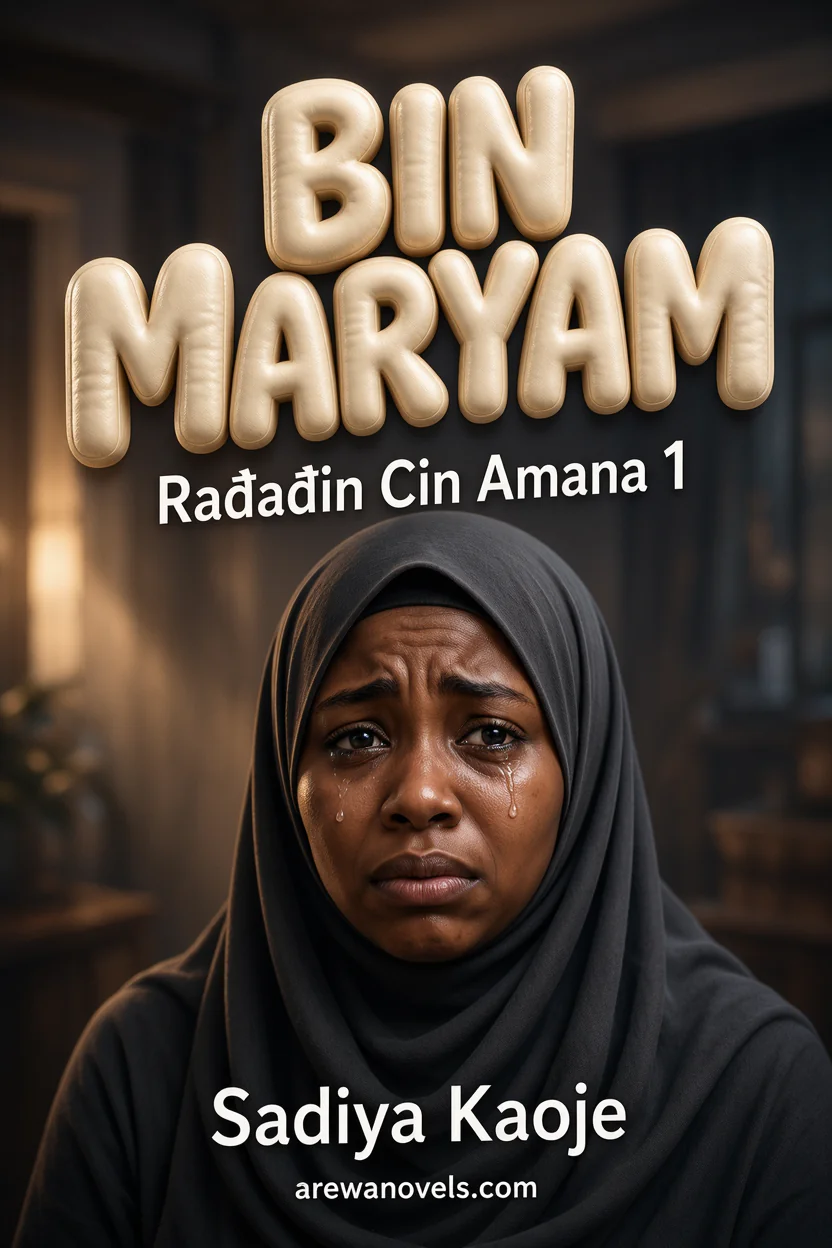
Bin Maryam Raɗaɗin Cin Amana 1 by Sadiya Kaoje
More book details
Description & Story Guide
Bin Maryam Raɗaɗin Cin Amana 1
by Sadiya Kaoje
Hook
Balaraba thought she had married the man she loved. She believed that beneath Aliyu's wealth, confidence, charm, and handsome appearance was a husband who would protect her, cherish her, and build a future with her. She was young, deeply in love, and willing to ignore the warnings of everyone who knew him.
Then, in the middle of the night, everything changed.
With a growing child inside her and nowhere to turn, Balaraba was thrown out of her husband's house and told that their marriage meant nothing to him. The man who once made her believe she was the only woman in his world suddenly claimed that he had never truly loved her. Worse still, he wanted nothing to do with the child she carried.
But Balaraba's story does not end at the gate of Aliyu's mansion.
Her departure marks the beginning of a painful journey through regret, betrayal, family conflict, faith, and the consequences of choosing love over wisdom. And while Balaraba struggles to understand how the man she loved became her greatest source of pain, another woman is stepping confidently into the very marriage that destroyed her.
She does not know that Aliyu's promises have been made before.
And she certainly does not know what may be waiting for her behind the charming smile of the man she believes will love her forever.
Summary
Balaraba is only nineteen when the marriage she once believed would become the foundation of her happiness collapses before her eyes. Her husband, Aliyu, who comes from a wealthy and influential family, suddenly turns against her and orders her out of his home. His cruelty becomes even more devastating when he reveals that he never intended to become a father and tells her that what happens to the pregnancy is no longer his concern. For Balaraba, the words are more painful than the divorce itself. She is not only losing her husband, she is discovering that the love she trusted may have been nothing more than an illusion.
With the night growing darker and fear surrounding her, Balaraba leaves the house carrying only her belongings and the pain in her heart. Fortunately, the family's security guard, Baba Musa, refuses to allow her to travel alone at such a dangerous hour. He takes her to his modest home, where his wife, Ubaida, receives her with compassion. In a house far removed from the luxury she has just left behind, Balaraba experiences a different kind of wealth. She receives kindness, food, shelter, and concern from people who have little compared to Aliyu's family, yet possess something she desperately needs at that moment: humanity.
By morning, Balaraba returns to her parents, where the reality of her decisions finally catches up with her. Her mother had warned her about Aliyu before the marriage, while her father had struggled with serious worry over the kind of man his daughter had chosen. Her brother Hamza reminds her that her life has not ended simply because her marriage has failed. He urges her to protect herself and the unborn child instead of allowing Aliyu's cruelty to destroy the rest of her future. Yet Balaraba is consumed by resentment. She hates Aliyu so deeply that she struggles even to accept the child growing inside her because the pregnancy reminds her of the man who broke her heart.
Meanwhile, Aliyu returns to his wealthy family home without showing remorse for what he has done. His mother, Laila, is devastated when she learns that he has divorced Balaraba and demanded that she terminate the pregnancy. Unlike Aliyu, Laila understands the seriousness of his actions. She has watched her son grow into a man whose wealth and privileged upbringing have shielded him from consequences. His father, however, has contributed to that problem by giving Aliyu almost everything he has ever wanted and allowing him to believe that he can do whatever he pleases. The family becomes divided between those who recognize Aliyu's destructive behavior and those who continue to protect him.
Before Balaraba's tears have even dried, Aliyu turns his attention to Murja, the woman he has already been courting. He presents himself to her as the perfect man, showering her with attention, gifts, promises, and affection. Murja believes she has finally found the husband she has always dreamed of. She sees his wealth, appearance, confidence, and romantic behavior, but she does not yet understand the darker side of the man she has chosen. As their relationship moves into marriage, Aliyu's carefully constructed image begins to raise disturbing questions. The reader is left wondering whether Murja has truly escaped Balaraba's fate or whether she has simply stepped into the same trap under a different name.
Genre
This novel is an emotional Hausa family drama built around marriage, betrayal, domestic conflict, romance, social class, and the consequences of poor choices. It also carries elements of suspense because Aliyu's behavior creates an unsettling question that hangs over the story: how many lives can one person's selfishness destroy before he finally faces the consequences?
The story combines intense family drama with psychological conflict. It explores what happens when love blinds someone to serious warnings, when wealth protects bad behavior, and when a person discovers too late that the individual they trusted was never who they believed him to be.
Settings
The story moves between two very different worlds. One is the wealthy environment surrounding Aliyu and his family, where luxury, influence, expensive possessions, and social status have shaped his understanding of life. The other is the modest world of Balaraba's family and Baba Musa's household, where people have fewer material possessions but demonstrate compassion, responsibility, hospitality, and concern for one another.
These contrasting environments are important because the novel does not simply present wealth as happiness or poverty as misery. Instead, it shows that character cannot be measured by what someone owns. Balaraba discovers kindness in a humble home after being rejected by a wealthy husband, creating one of the story's strongest contrasts.
Core Themes
Betrayal and Broken Trust
At the heart of the story is Balaraba's devastating realization that the man she trusted most has become the person she fears and hates. Her pain comes not only from being divorced but from discovering that the affection she once received may have been built on deception.
The Consequences of Ignoring Warnings
Balaraba's family warned her about Aliyu before she married him. She chose to follow her heart instead. After the marriage collapses, she is forced to confront the painful consequences of that decision. The story does not simply condemn her for making a mistake. It explores how young people can become so emotionally attached to someone that advice from those who love them begins to sound irrelevant.
Wealth Without Character
Aliyu has money, education, appearance, confidence, and social influence. Yet none of these qualities make him a good husband. His behavior demonstrates one of the novel's strongest messages: wealth can provide comfort and influence, but it cannot manufacture compassion, loyalty, self-control, or moral responsibility.
Family Influence
Aliyu's character is closely connected to the environment in which he was raised. His father repeatedly shields him from consequences, while his mother struggles helplessly to correct what she believes is going wrong. The novel therefore raises difficult questions about parenting and privilege. When parents continually excuse their child's wrongdoing, are they protecting him or preparing him for a greater downfall?
Faith and Resilience
Despite her suffering, Balaraba remains connected to prayer. Her faith becomes one of the few things she can still hold onto when everything else seems to have collapsed. Her journey suggests that hardship can change a person's life without necessarily destroying their future.
The Vulnerability of Young Marriage
Balaraba is only nineteen, and her story highlights the danger of entering marriage without fully understanding the character of the person involved. The novel emphasizes the importance of investigation, family counsel, maturity, and careful consideration before marriage.
The Innocence of an Unborn Child
The unborn child becomes an important emotional element in the conflict. The child has no responsibility for Aliyu's behavior, yet becomes trapped in the consequences of his decisions. Hamza's insistence that the child should not suffer because of the father's wrongdoing adds an important moral dimension to the story.
Key Characters
Balaraba
Balaraba is the emotional center of the story. She is young, beautiful, religious, affectionate, and deeply attached to the people she loves. Her greatest weakness is also connected to her greatest strength: she loves wholeheartedly. That love causes her to ignore warnings about Aliyu, but the betrayal she experiences eventually forces her to confront reality and begin rebuilding herself.
Aliyu
Aliyu is handsome, wealthy, educated, confident, and accustomed to getting what he wants. He is also arrogant, manipulative, impulsive, and emotionally destructive. His privileged upbringing has given him enormous freedom without enough accountability. His treatment of Balaraba reveals a man who views relationships according to his own desires rather than mutual responsibility.
Murja
Murja enters the story believing she has found the man of her dreams. She is attracted to Aliyu's character as he presents it to her and believes his affection is genuine. Her position creates one of the novel's biggest suspense points because readers already know something about Aliyu that she does not.
Hamza
Hamza is one of the voices of reason in Balaraba's life. He recognizes her pain but refuses to let her believe that one failed marriage has destroyed her entire future. His support becomes especially important when Balaraba begins considering a decision that could affect her unborn child.
Laila
Laila is Aliyu's mother and one of the people most disturbed by the man her son has become. She has tried to influence him, but her efforts have repeatedly failed. Her emotional conflict is particularly painful because she loves her son while simultaneously recognizing the harm he causes others.
Alhaji Marafa
Aliyu's father is wealthy, powerful, and influential. His parenting style has helped create the environment in which Aliyu operates without fear of consequences. Rather than treating Aliyu's behavior as a serious moral problem, he often approaches it from a position of privilege and entitlement.
Baba Musa and Ubaida
Baba Musa and his wife Ubaida represent compassion at a time when Balaraba feels completely abandoned. Their home may be modest, but their willingness to shelter and care for her demonstrates that dignity and kindness are not determined by wealth.
Analytics and Insight
One of the most compelling aspects of the novel is its portrayal of the difference between appearance and reality. Aliyu appears to have everything society often associates with an ideal husband. He is handsome, educated, financially comfortable, confident, and capable of making a woman feel special. Yet behind that attractive image is a deeply troubling personality.
The novel also uses Balaraba's downfall to explore the danger of confusing intense affection with genuine love. Balaraba believed that because Aliyu could make her feel loved, he must necessarily be capable of loving her responsibly. The story challenges that assumption by showing how quickly affection can disappear when it is not supported by character.
Another powerful element is the contrast between Aliyu's family and Baba Musa's household. Balaraba leaves a magnificent home in the middle of the night and finds refuge in a simple home where people immediately worry about her safety. This contrast gives the story an important social message. A person's value is not determined by the size of their house, the quality of their car, or the amount of money in their account.
The family conflict surrounding Aliyu also gives the novel greater depth. His actions are not presented as an isolated problem. They are connected to years of indulgence, privilege, and failure to impose meaningful boundaries. His mother's distress shows the painful reality of watching someone you love repeatedly make destructive choices while refusing to change.
Most importantly, the novel leaves readers with a question that extends beyond Balaraba's marriage. If someone can destroy one relationship so easily and immediately move into another while behaving as though nothing happened, how long can such a pattern continue before the consequences finally catch up with them?
Why Readers Will Want to Continue
Balaraba's story begins with heartbreak, but the real suspense lies in what comes after the heartbreak. Will she allow Aliyu's betrayal to define the rest of her life? Will she find the strength to raise her child without allowing hatred to consume her? Will Aliyu ever understand the damage he has caused?
And then there is Murja.
She believes she has won the love of a wealthy and handsome man. She believes Aliyu's promises are different from everything Balaraba experienced. She believes she is special.
But the reader already knows that Aliyu has made promises before.
That knowledge transforms Murja's happiness into a source of suspense. Every romantic promise he makes carries a question behind it. Is he truly a changed man, or is Murja simply the next person to discover what Balaraba learned the hard way?
Insightful Quote
"A broken marriage is not always the end of a woman's story. Sometimes it is the painful beginning of the life she was meant to discover."
Final Impression
This is a story about love that looked beautiful from the outside but concealed a painful reality underneath. It is about a young woman who trusted the wrong person, a family struggling with the consequences of privilege, and another woman walking unknowingly toward the same man.
Balaraba's greatest battle is no longer winning Aliyu back. It is learning how to live after losing the future she imagined with him.
And as Aliyu continues moving from one woman to another, the story leaves readers waiting for the moment when charm, wealth, and influence can no longer protect him from the consequences of his own actions.
Read or download this novel
Choose the option available for your account and this book.
Related Novels
- Boyayyar Alaƙa Complete Hausa Novel by Asmy B Aliyu -
- Auren Wata Uku Complete Hausa Novel by Sameena Aleeyou -
- SAIFUDEEN CMPLT BY ESHAAAT BY Billy giro -
- Wazai furta Kafin Dare Ya Kare by Aysha Galadima -
- DR -
- SUDESS Daga Hatsari Zuwa Soyayya by AUTAR AREWA -
- DA JININSA NAKE RAYUWA Jininsa, Rayuwata By Amanar Janafty -
- IG AJEEMAL Neman Mahaifi 1 & 2 By Oum AmReesh -
- 𝐙𝐀𝐅𝐈𝐍 𝐖uta Book 1 Complete Hausa Novel by Maryam Star -
- Zafin Wuta Book 2 Complete Hausa Novel by Maryam Star -
- MALAMIN BOGI Fuskar Yaudara By MAMAN AFRAH -
- IHSAN Auren Fansa by XOUBHIE -