
Introduction
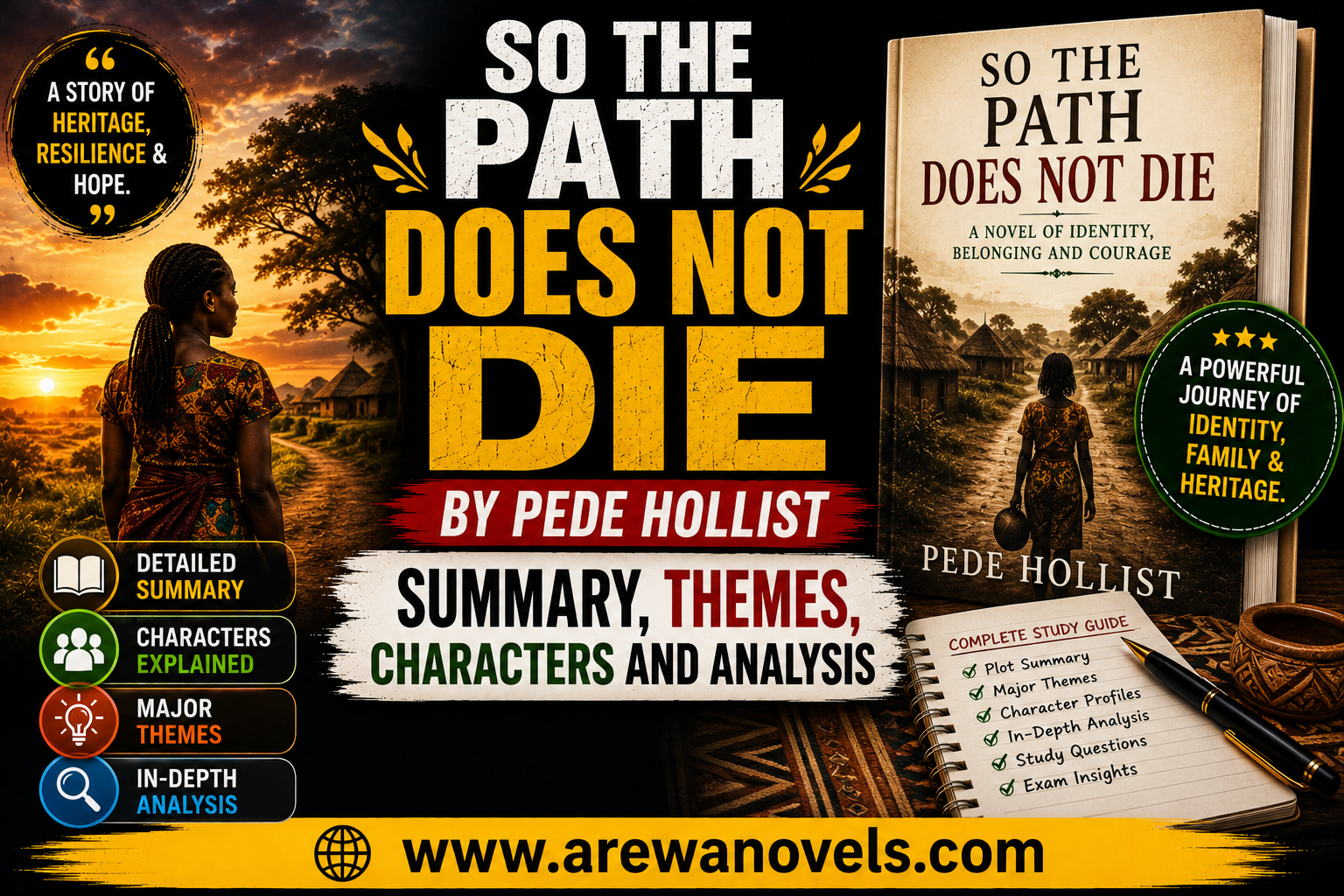
Some novels chart a single crossing, from one country to another, and let that crossing stand for everything the protagonist becomes. So the Path Does Not Die by Pede Hollist does something more demanding: it follows its heroine across two continents and roughly two decades, refusing to let either "home" or "abroad" settle into a simple answer to the question of where she truly belongs. Shortlisted for the 2013 Caine Prize for African Writing, the novel opens on the night a young girl in rural Sierra Leone narrowly escapes a communal circumcision ceremony, and closes years later with that same girl, now a grown woman shaped by Freetown, by Washington, and by everything in between, returning home to work with children scarred by war. Hollist, a Sierra Leonean-born writer and lecturer based in the United States, draws heavily on the tensions of his own diasporic vantage point, and the result is a novel that resists tidy resolution in favour of something more honest: the sense that identity, for a woman moving between traditional and Western worlds, is always a negotiation rather than a destination.
For students, this is a rich text for thinking about the bildungsroman form, about how a story of personal growth can also become a story about a whole community's relationship to tradition and change. For teachers, it offers an unusually wide canvas, moving from a Sierra Leonean village to an elite American college to the immigrant social world of Washington, DC, giving you plenty of material for discussions of setting, structure, and voice. What follows takes you through the whole shape of that journey.
What the Book Is About
At its centre, the novel is about Finaba, known for most of the book as Fina, and her lifelong search for belonging, a search that begins with her family's decision about whether she will undergo female circumcision and continues through her migration to the United States and her eventual return to Sierra Leone. The novel uses Fina's personal journey to explore a much larger question: what does it actually mean to belong to a place, a tradition, or a community, when a person's life has been shaped by more than one of each. Hollist frames the book with a nod to Chinua Achebe's preoccupation with tradition and change, and the novel's title itself, evoking the idea of a path that must be walked and kept alive, signals its central concern with continuity, disruption, and what is carried forward across generations and across oceans.
What Happens in the Story
The novel opens in Talaba village, where Fina's grandmother, Baramusu, and her mother, Nabou, are locked in tense disagreement over whether Fina should take part in the community's circumcision rite, a conflict sharpened by the fact that Fina's parents, Amadu and Nabou, had already lost their first daughter to complications from the same ceremony. Fina's circumcision is interrupted on the very night it is meant to happen, an event that becomes the defining rupture of her early life and shapes much of what follows. As she grows older in Freetown, Fina navigates the ordinary and extraordinary difficulties of Sierra Leonean girlhood, eventually securing a path to the United States with help from NGO workers and an admirer connected to the diamond trade. In America, she passes through elite Crowder College and then into the fashionable, transnational social world of Washington, DC, working a series of jobs, building friendships, and eventually becoming engaged to Cammy, a successful Trinidadian urologist. Their relationship is complicated by sharply different attitudes toward her circumcision history and by secrets from both of their pasts that resurface as their wedding approaches, including a dramatic revelation involving a young man who claims to be Cammy's son. Around Fina's central story, Hollist weaves several closely connected subplots: her friend Aman's relationship with her Nigerian fiancé Bayo, her foster sister Edna's marriage to Kizzy, and the harrowing story of Mawaf, a war-traumatized teenager whose experience of abuse blurs the line between love and violence in her own mind. By the novel's end, Fina's path curves back toward Sierra Leone, where she returns to work as an advocate for children traumatised by the country's civil war, closing the story in the same African setting where it began, though on profoundly different terms.
Who the Important Characters Are
Finaba, known as Fina, is the novel's central character and narrator, whose journey from a Sierra Leonean village through American higher education and professional life, and back again, forms the spine of the book.
Baramusu, Fina's grandmother, represents the pull of traditional practice, insisting on Fina's participation in the community's circumcision rite as a matter of custom and continuity.
Nabou and Amadu, Fina's parents, are caught between respecting inherited tradition and their own grief and caution, having already lost a daughter to the same ceremony they must now decide whether to permit for Fina.
Cammy, a Trinidadian urologist, becomes Fina's fiancé in America. His outwardly successful life conceals secrets of his own, and his differing attitude toward Fina's circumcision history becomes a significant source of tension in their relationship.
Aman, an African-American friend of Fina's, and her Nigerian fiancé Bayo, also called Baryour, provide one of the novel's central subplots, offering a parallel exploration of cross-cultural relationship and identity.
Edna, Fina's foster sister, and her husband Kizzy offer another subplot thread, broadening the novel's portrait of the immigrant experience beyond Fina's story alone.
Mawaf, a teenager traumatised by Sierra Leone's civil war, brings the novel's engagement with violence and its psychological aftermath into sharp, painful focus.
Why the Characters Behave the Way They Do
Baramusu insists on tradition because, within her understanding of the world, the circumcision rite is not cruelty but continuity, a practice that binds the community together and confirms a girl's place within it; her insistence comes from conviction rather than malice. Nabou and Amadu hesitate precisely because they have already paid the highest possible price for that same tradition, and their caution reflects a very human tension between honouring inherited custom and protecting the child they have left. Fina's lifelong search for belonging is driven by the disruption of that single night, the interrupted ceremony that leaves her neither fully inside the tradition her grandmother represents nor entirely free of its shadow, a position that shapes how she relates to both Sierra Leone and America for the rest of the novel. Cammy's guardedness about his own past, and the tension it creates with Fina, reflects a man who has built a polished public life partly to keep older wounds and secrets from resurfacing. Mawaf's confusion between love and abuse is the direct, devastating result of trauma inflicted during the civil war, and Hollist uses her story to show how violence can distort even a survivor's most basic understanding of intimacy.
The Major Conflicts
The novel's earliest and most foundational conflict is between Baramusu and Nabou over Fina's circumcision, a conflict that encapsulates the broader tension between tradition and change running through the entire book. As Fina moves into adulthood, a new conflict emerges between her Sierra Leonean upbringing and the expectations, opportunities, and social codes of American life, a tension she must navigate in friendships, in the workplace, and eventually in her engagement to Cammy. Her relationship with Cammy generates its own conflict, rooted in their differing attitudes toward her circumcision history and complicated further by secrets from his own past. Beyond Fina's personal story, the novel stages a wider conflict between the immigrant's sense of "home" and "abroad," dramatised across its various subplots, none of which offer an easy or singular resolution to that tension.
The Important Themes
Belonging and the immigrant condition. This is the novel's organising theme, explored through Fina and nearly every character around her, as they each negotiate what "home" means once a life has been split across two very different worlds.
Tradition versus change. Framed explicitly through its Achebe-inflected opening and through the conflict over Fina's circumcision, the novel treats tradition not as something to be simply rejected or preserved, but as a living force that every generation must actively reckon with.
Female circumcision and bodily autonomy. Fina's interrupted circumcision, and the differing attitudes it later provokes in her relationship with Cammy, allow Hollist to explore the practice with nuance rather than sensationalism, attentive to its cultural weight as well as its personal cost.
The diaspora experience. Through debates among Fina's African and African-American friends about whether a shared "diaspora complex" truly exists, the novel examines the sometimes uneasy solidarity, and sometimes real distance, between different communities of Black identity in America.
Trauma and its aftermath. Mawaf's story, along with the novel's broader Sierra Leonean setting, brings the lingering psychological wounds of civil war into the narrative, insisting that Fina's personal journey cannot be separated from her country's recent history.
Secrets and revelation. From Cammy's hidden past to the buried histories that surface among the novel's other couples, Hollist repeatedly shows how personal history, however carefully concealed, tends eventually to resurface and demand reckoning.
The Setting
The novel moves across a wide and carefully drawn geography: Talaba village and Freetown in Sierra Leone during Fina's childhood and adolescence, the elite grounds of Crowder College in the United States during her early adulthood, and the fashionable, transnational social scenes of Washington, DC, as she builds a career and a new circle of friends. This deliberately wide setting is essential to the novel's meaning, since its central theme, the negotiation between "home" and "abroad," could not be dramatised convincingly within a single location. The novel's return to Sierra Leone at its close, with Fina working as an advocate for war-traumatised children, closes the geographic loop the story opened, but on entirely changed terms.
The Major Events
Fina's interrupted circumcision on the night it was meant to occur stands as the novel's founding event, the rupture from which her lifelong search for belonging proceeds. Her migration to the United States, made possible through NGO connections and a diamond-trade admirer, marks the beginning of the novel's second major movement. Her time at Crowder College and subsequent rise within Washington's fashionable social world chart her gradual, complicated integration into American life. Her engagement to Cammy, and the resurfacing of secrets from both their pasts, including the dramatic appearance of a young man claiming to be Cammy's son, forms the novel's central crisis. Her eventual return to Sierra Leone to work with war-traumatised children closes the novel, bringing her personal journey full circle.
The Meaning Behind Important Events
The interrupted circumcision matters because it leaves Fina in a permanently liminal position with respect to her own tradition, neither fully claimed by the ritual her community intended for her nor entirely free of the meaning it was meant to confer, and this in-between status becomes the template for every subsequent negotiation of identity in her life. Her migration and rise within Washington's social world matter because they demonstrate that "arrival" in a new country is never simply a matter of geography; Fina must continually renegotiate who she is within American social codes that are themselves far from unified or simple. The secrets that surface around her engagement to Cammy matter because they insist that no character in the novel, however outwardly successful, is free of an unresolved past, reinforcing the novel's broader argument that history, personal or national, cannot simply be outrun. Fina's return to Sierra Leone at the novel's end matters because it refuses a simple "immigrant success story" ending; instead, belonging is presented as something achieved by returning to engage directly with her country's wounds, not by permanently escaping them.
The Author's Major Ideas
Hollist's central argument is that identity for a diasporic subject is never a simple choice between two fixed poles, tradition or modernity, home or abroad, but an ongoing negotiation that a person carries with them wherever they go. By framing the novel with an allusion to Achebe, Hollist situates his own work within a long tradition of African literature concerned with what is gained and lost when custom meets change, while insisting on his own, more contemporary vantage point, one shaped by actual transnational migration rather than colonial encounter alone. Through Fina's eventual return to Sierra Leone, Hollist also seems to argue that genuine belonging requires active engagement with one's origins, including their most painful aspects, rather than either uncritical nostalgia or permanent departure.
Important Symbols and Literary Devices
The novel's title, evoking a path that must not be allowed to die, functions as a governing symbol for the idea of cultural continuity, suggesting that traditions survive only through active, ongoing engagement rather than passive inheritance. The structure of the novel itself, moving across village, city, and continent in a form closer to the bildungsroman than to a single tightly contained plot, mirrors its thematic insistence that identity is built cumulatively across very different settings rather than fixed in one place. Hollist's attentiveness to dialogue, social gathering, and telling detail, whether at an elite American college or a lavish Washington wedding, works as a device for grounding the novel's larger themes in vividly observed, often wryly comic social texture rather than abstract argument.
The Lessons Readers Can Learn
The novel suggests that inherited tradition deserves neither uncritical reverence nor outright dismissal, but careful, honest reckoning, since both Baramusu's insistence on custom and Fina's later distance from it carry real costs and real value. It teaches that migration does not resolve questions of identity so much as multiply them, requiring an immigrant to continually renegotiate belonging rather than arrive at it once and be done. It also asks readers to notice how trauma, whether personal, as in Mawaf's story, or national, as in Sierra Leone's civil war, continues to shape people's lives long after the precipitating events have passed, and that any honest account of "home" must reckon with that history rather than romanticise it. Above all, the novel suggests that a genuine sense of belonging may require returning, in some form, to the place and the wounds one came from.
Questions You May Encounter in a Test or Examination
- Discuss the theme of belonging in So the Path Does Not Die, with reference to Fina's journey between Sierra Leone and the United States.
- Examine the significance of the conflict between Baramusu and Nabou over Fina's circumcision.
- Discuss the role of Cammy in the novel and the significance of the secrets that resurface in his relationship with Fina.
- To what extent does the novel present tradition and modernity as being in conflict, and to what extent does it suggest they can coexist?
- Analyse the function of the subplots involving Aman and Bayo, or Edna and Kizzy, in relation to the novel's central themes.
- Discuss the character of Mawaf and the significance of her story to the novel's treatment of trauma.
- Examine the significance of the novel's title in relation to its central themes.
- Discuss the importance of setting in the novel. How does the movement between Sierra Leone and the United States shape its meaning?
- Write a character sketch of Fina, tracing her development from childhood in Talaba village to her eventual return to Sierra Leone.
- Discuss the significance of Fina's decision to return to Sierra Leone at the end of the novel. What does it suggest about the meaning of "home"?
This guide is written as an original academic companion to So the Path Does Not Die by Pede Hollist, intended to support close reading and examination preparation. It is not a substitute for engaging directly with the primary text.