
Introduction
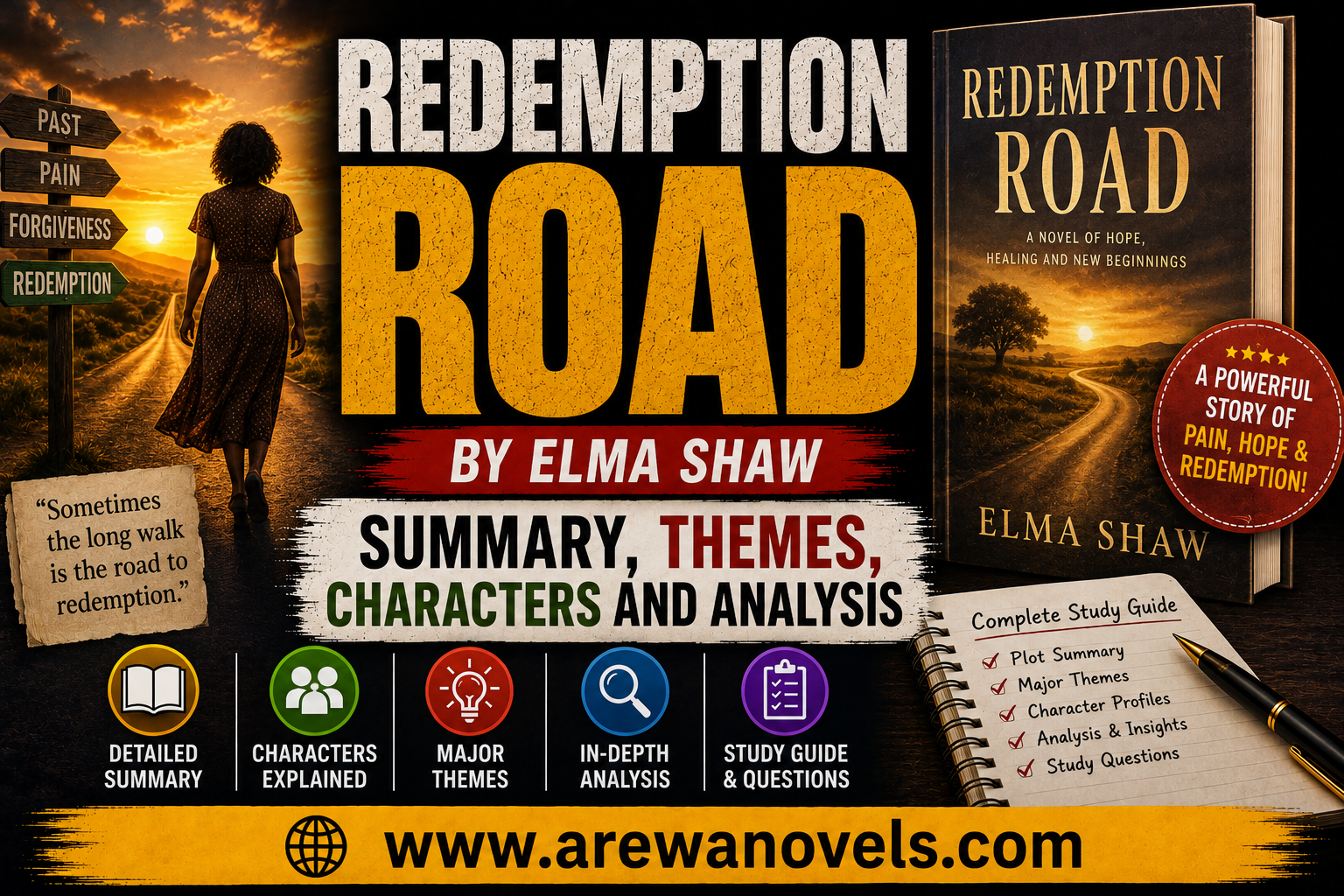
The truth is, some novels about war choose the battlefield as their setting. Redemption Road by Elma Shaw chooses instead the much harder terrain that comes afterward: the slow, uneven work of living in the ruins a war leaves behind. Set in Monrovia during the presidency of Charles Taylor, in the years following the Liberian civil war of 1989 to 2003, the novel follows Bendu Lewis, a young Americo-Liberian woman, as she confronts memories of her own captivity and abuse at the hands of a warlord, searches for the daughter she was forced to abandon, and gradually finds her way toward something the novel is honest enough to treat as difficult and incomplete: not closure exactly, but movement.
Elma Shaw is herself a Liberian writer and humanitarian whose work outside fiction has focused on peacebuilding and trauma recovery, and that background is visible on every page of this, her debut novel. The title itself borrows from a real road in Monrovia where political executions once took place after the 1980 coup, and Shaw turns that grim historical fact into a governing metaphor for the whole book: redemption, like the road itself, is not a place you arrive at once and stay, but a path that has to be walked, and walked again, by an entire wounded nation. For students, this novel offers a rare close-up view of how post-conflict literature handles trauma without either sensationalising violence or offering false comfort. Read it with patience, and pay attention to how differently each character finds, or fails to find, their own way down that road.
What the Book Is About
At its core, this is a novel about what a nation and its people are left to do once a war has technically ended but its wounds have not. Bendu Lewis is both a victim and, in ways the novel does not shy away from, complicated by her own choices made under unbearable conditions, and her personal journey toward acknowledging her past, seeking her lost daughter, and building a means of helping other survivors becomes the novel's central thread. Around her, Shaw builds a wider portrait of Monrovia in the aftermath of conflict, populated by former combatants, grieving families, displaced children, and officials struggling to build something like justice out of the wreckage. The book is ultimately about the distance, and the difficult connection, between justice and healing, and about whether either is fully possible without the other.
What Happens in the Story
The novel opens with the Lewis family gathering to commemorate the tenth anniversary of the death of Bendu's grandmother, Catherine May Tyler, known to the family as Granny May, who died an undignified death during the war and whose remains were never recovered, forcing the family to bury a symbolic, empty casket in her place. This commemoration becomes the catalyst for Bendu's own reckoning with her past. Through flashbacks and gradually unfolding memory, the reader learns that Bendu was captured during the war by the warlord known as Commander Cobra, whose real name is Moses Varney, and taken to a camp called Duluma, where she was forced into a so-called marriage with a fighter named Samson and endured sustained abuse. Bendu became pregnant during this captivity, gave birth to a daughter, and, unable to protect the child under such conditions, left her with other camp survivors before escaping herself. In the present timeline of the novel, Moses Varney has left his warlord past behind and now appears at Liberia's Temple of Justice, where his own history is under scrutiny, and where he encounters displaced young men whose situations echo his own childhood experiences of loss and displacement. Bendu, meanwhile, begins the work that will define her adult life, founding an organisation called Peace in Practice to provide counselling and support to women who survived the war, working alongside fellow survivors such as Rosetta, who is bitter after losing her husband to ethnic violence, the nurturing Josephine, and Tenneh, who struggles with depression. Bendu's journey toward her own healing includes learning the full truth of how her younger brother Benji died during the 1980 coup, sacrificing himself so that she and others could live, and eventually writing a symbolic letter addressed to everyone who hurt her during the war, an act that marks a significant turn in her own process of release. The novel's most significant thread of hope arrives when Bendu is finally reunited with the daughter she was forced to leave behind, achieved through the International Committee of the Red Cross, closing her personal arc on a note of hard-won reunion rather than simple resolution.
Who the Important Characters Are
Bendu Marie Lewis is the novel's protagonist, an Americo-Liberian woman in her late twenties whose experiences of captivity, forced marriage, and motherhood under war conditions form the emotional centre of the book, and whose gradual journey toward acknowledging her past drives the novel's overall arc.
Commander Cobra, also known as Moses Varney, is Bendu's former captor, whose portrayal in the present timeline complicates any simple villain narrative; the novel shows him grappling with his own history of childhood loss and displacement even as he faces scrutiny for his actions during the war.
Catherine May Tyler, known as Granny May, is Bendu's grandmother, whose undignified death during the war and unrecovered remains set the novel's opening commemoration in motion and stand as a symbol of the war's broader, unresolved losses.
Mr. Ben and Mrs. Eva Lewis are Bendu's parents, grounding the novel's central family and providing the domestic context against which Bendu's trauma and recovery play out.
Siatta and Calvin Daniels are closely connected to Bendu's family history, tied especially to the revelation of how her brother Benji died protecting them during the 1980 coup.
Rosetta, Josephine, and Tenneh are fellow war survivors who join Bendu in group counselling, each representing a different response to shared trauma: bitterness, nurturing resilience, and depression, respectively.
Agnes Jallah, closely involved in the counselling work alongside Bendu, and other figures such as Terrance Clarke, Judge Dagoseh, May Davies, and Lieutenant James Tarpeh populate the novel's wider social and judicial landscape as Liberia works, imperfectly, toward some form of post-war accountability.
Why the Characters Behave the Way They Do
Bendu's long avoidance of her past, followed by her gradual willingness to confront it, is driven by the sheer scale of what she survived; the novel treats her hesitation not as weakness but as a realistic response to trauma that requires time, community, and the right circumstances, such as her grandmother's commemoration, before it can be faced directly. Her decision to found Peace in Practice reflects a determination to convert her own survival into something useful for others, a common and psychologically honest pattern among trauma survivors who find meaning through helping people with shared experiences. Moses Varney's behaviour in the present, marked by empathy toward displaced boys who remind him of his own past, suggests a man whose capacity for violence during the war existed alongside, rather than in place of, a more complicated inner life shaped by his own childhood suffering, without the novel excusing the harm he caused. Rosetta's bitterness, Josephine's nurturing instinct, and Tenneh's depression each reflect different, equally realistic ways that trauma can settle into a person's ongoing life, reinforcing the novel's insistence that there is no single correct way to survive or to heal.
The Major Conflicts
The novel's central conflict is internal: Bendu's struggle to reconcile the woman she has become with the trauma she endured and, in some ways, was complicit in surviving, including choices made under captivity that continue to weigh on her. A closely related conflict plays out at the level of the whole community, between the pursuit of formal justice, represented by figures such as Judge Dagoseh and the proceedings touching Moses Varney, and the pull toward personal revenge that several survivors must resist or reckon with. There is also a conflict between memory and silence, as characters throughout the novel must decide whether confronting painful history, as Bendu eventually does through her letter and her search for her daughter, is more valuable than leaving it buried.
The Important Themes
Justice versus revenge. The novel repeatedly stages the tension between formal, institutional efforts at accountability and the very human temptation toward personal vengeance, without offering an easy verdict on which path best serves survivors.
Trauma and its long aftermath. Through Bendu, Rosetta, Josephine, Tenneh, and others, the novel presents trauma as an ongoing condition rather than a single event safely confined to the past, one that continues to shape behaviour, relationships, and mental health years after the war's formal end.
Resilience. Bendu's care for her ailing grandmother despite others' advice to let go, and her eventual founding of a support organisation for fellow survivors, exemplify the novel's broader interest in the capacity of individuals to keep functioning, and even to help others, in the aftermath of catastrophic loss.
Forgiveness and redemption. The novel's title and central metaphor point directly to this theme, treating redemption not as instant absolution but as a demanding, ongoing process requiring truth-telling, courage, and the willingness to face painful memory.
The dehumanising effects of war. Through the depiction of Duluma camp and the experiences of both victims and former combatants, the novel refuses to let readers see war as an abstraction, insisting instead on its direct, lasting cost to individual human beings.
Loss and grief. From Granny May's unrecovered remains to Benji's sacrifice during the 1980 coup, the novel repeatedly returns to the specific, unresolved nature of loss experienced during conflict, and to the different ways communities attempt to memorialise what cannot be fully recovered.
The Setting
The novel is set in Monrovia, Liberia, during the administration of former president Charles Taylor, in the uneasy years following the end of the civil war that devastated the country between 1989 and 2003. This setting is essential to the novel's meaning, since it allows Shaw to examine not a war in progress but its long aftermath, the period in which survivors, former combatants, and institutions alike must determine what comes next. The novel's title deepens this setting further by referencing an actual road in Monrovia associated with political executions following the 1980 coup, turning a real, specific piece of the nation's geography into a symbol for the entire country's difficult path toward healing.
The Major Events
The commemoration of Granny May's death, marking ten years since her passing during the war, opens the novel and sets Bendu's personal reckoning in motion. The gradual revelation, through flashback, of Bendu's captivity by Commander Cobra, her forced union with Samson, and the birth and abandonment of her daughter, forms the emotional core of the novel's backstory. Moses Varney's appearance at the Temple of Justice, and his encounters with displaced young men who mirror his own past, develop the novel's present-day thread concerning accountability and the complicated humanity of former combatants. Bendu's founding of Peace in Practice and her ongoing counselling work with fellow survivors mark her transition from private suffering toward active engagement with collective healing. Her discovery of the full truth behind her brother Benji's death during the 1980 coup, her writing of a symbolic letter to those who wronged her, and her eventual reunion with her daughter through the International Committee of the Red Cross together bring the novel to its resolution.
The Meaning Behind Important Events
The symbolic, empty casket used to bury Granny May matters because it makes literal one of the novel's central preoccupations: the impossibility of fully recovering what war has taken, and the necessity of finding meaningful ways to honour loss even when nothing tangible remains. Bendu's abandonment of her daughter at Duluma camp carries enormous weight because it complicates any simple narrative of pure victimhood, forcing both Bendu and the reader to hold together compassion for what she endured and honest acknowledgment of the impossible choice she was forced to make. Moses Varney's empathy toward displaced boys matters because it insists that the men who committed wartime atrocities were themselves often shaped by earlier cycles of loss and violence, a complication that does not excuse harm but does deepen the novel's account of how such harm is produced. Bendu's letter to those who hurt her, and her eventual reunion with her daughter, matter because together they demonstrate the novel's central argument that redemption requires both an internal reckoning with the past and concrete, external action taken toward repair.
The Author's Major Ideas
Shaw's central argument is that healing after mass atrocity cannot be reduced to a single mechanism, whether formal justice, personal forgiveness, or institutional truth-telling alone, but requires all of these working imperfectly together, pursued differently by each survivor according to their own capacity and circumstance. By giving even a former warlord like Moses Varney a portrait of inner complexity, Shaw resists the temptation to divide her characters neatly into victims and villains, arguing instead that the machinery of war implicates and damages nearly everyone it touches, including those who go on to commit violence themselves. Through Bendu's founding of Peace in Practice, Shaw also makes a quieter argument about agency: that survivors are not simply defined by what was done to them, but can become active architects of their own and others' recovery.
Important Symbols and Literary Devices
The title itself, Redemption Road, functions as the novel's central symbol, drawing on the real Monrovia road associated with past executions to frame redemption as a literal path that must be walked, difficult and unfinished, rather than a destination reached once and for all. The empty, symbolic casket used to bury Granny May operates as a powerful image of unrecoverable loss, standing in for all that the war took that can never be fully restored. Bendu's letter to those who wronged her functions as a device of catharsis within the narrative, externalising an internal process of reckoning in a way that makes her healing visible to the reader. Shaw's use of flashback throughout the novel mirrors the actual psychological experience of trauma, in which the past resurfaces unpredictably into the present rather than remaining safely contained in linear memory.
The Lessons Readers Can Learn
The novel teaches that healing from collective trauma is neither quick nor simple, and that survivors deserve patience, community, and support rather than pressure toward premature closure. It suggests that formal justice and personal reconciliation are not automatically opposed to one another, but that a society recovering from atrocity often needs to pursue both, however imperfectly, rather than choosing one to the exclusion of the other. It also asks readers to resist easy categorisation of perpetrators and victims, recognising instead that cycles of violence often draw both from the same wells of earlier loss and displacement. Above all, the novel insists that redemption, whether personal or national, is achieved through sustained, deliberate effort, truth-telling, and the willingness to keep walking a difficult road rather than through any single act of absolution.
Questions You May Encounter in a Test or Examination
- Discuss the significance of the title Redemption Road in relation to the novel's central themes.
- Examine the theme of justice versus revenge as portrayed through the novel's characters and events.
- Discuss Bendu Lewis's journey toward healing. What obstacles does she face, and how does she ultimately move past them?
- To what extent does the novel complicate the portrayal of Commander Cobra/Moses Varney as a villain?
- Analyse the significance of the symbolic casket used to bury Granny May.
- Discuss the role of group counselling and the characters of Rosetta, Josephine, and Tenneh in the novel's treatment of trauma.
- Examine the significance of Bendu's reunion with her daughter at the end of the novel.
- Discuss the novel's use of flashback as a narrative device. What effect does it have on the reader's understanding of the characters?
- In what ways does the novel suggest that redemption is a process rather than a single event?
- Discuss the significance of setting the novel in post-war Monrovia during the Charles Taylor administration.
This guide is written as an original academic companion to Redemption Road by Elma Shaw, intended to support close reading and examination preparation. It is not a substitute for engaging directly with the primary text.